








By David Akoji
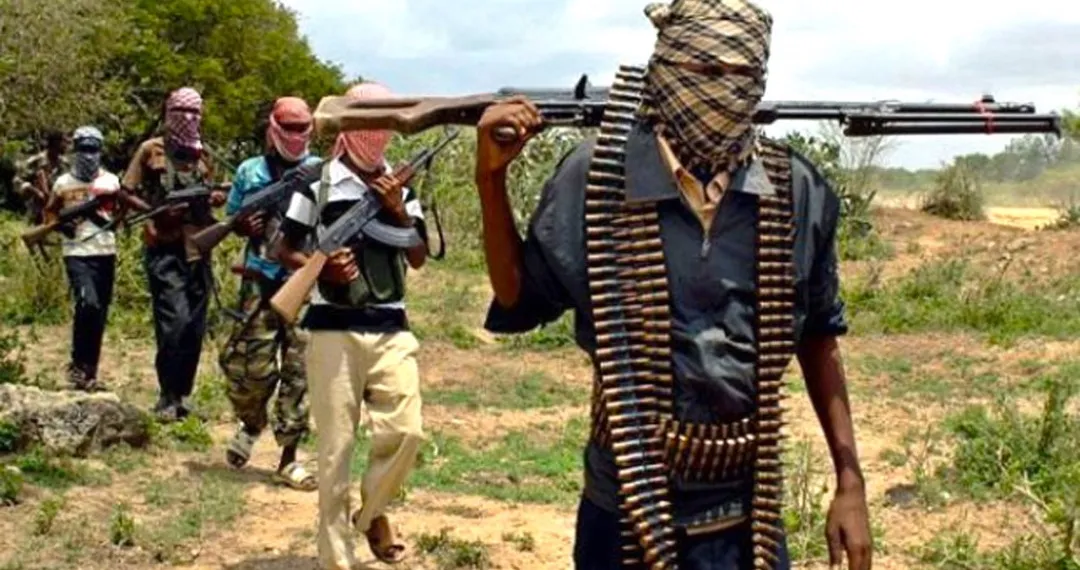
For over a decade, Boko Haram has defied Nigeria’s military campaigns, outlived shifting strategies, and adapted to successive waves of state response. The persistence of the insurgency is often misread as evidence of military inadequacy. Yet this interpretation is both convenient and incomplete. The deeper truth is more uncomfortable: Boko Haram endures not because Nigeria is incapable of defeating it, but because the conflict itself sits at the intersection of geographies, histories, and identities that Nigeria has never fully governed.
At the heart of this misdiagnosis lies a fundamental error of perspective. Boko Haram is routinely framed as a domestic security challenge, an internal rebellion to be subdued through force concentration, intelligence improvements, and tactical superiority. But the theatre of its operation tells a different story. The Lake Chad Basin is not merely Nigeria’s northeastern fringe; it is a crossroads of the Sahel, the Sahara, and Central Africa. In strategic terms, Maiduguri is as much a Sahelian city as it is a Nigerian one.
The Kanuri heartlands of Borno and Yobe, often described as Nigeria’s “far north,” are in fact closer, historically and culturally, to trans-Saharan networks than to the coastal imaginaries of Lagos or even the political center in Abuja. Long before colonial cartography stitched disparate regions into the entity now called Nigeria, these territories were embedded in eastward facing systems of commerce, scholarship, and religious exchange. Pilgrimage routes connected them to Sudan and the broader Islamic world; trade routes linked them to North Africa. These were not peripheral zones, they were central nodes in a different civilizational map.
Understanding Boko Haram, therefore, requires situating it within this older and broader geography. The group did not emerge in isolation. Its intellectual and ideological DNA reflects transnational currents. Early influences can be traced to Salafi movements circulating through Sudan and the wider Sahel. Elements of its doctrinal rigidity echo teachings encountered in parts of the Middle East (reflective of deep hatred for western civilization) and South Asia, often transmitted through returning students and clerics shaped by global Islamic networks. This genealogy complicates the notion of Boko Haram as merely a local aberration; it is, in many respects, a local manifestation of wider ideological flows the we have failed to either monitor nor curtail.
Equally significant is the operational ecology that sustains the insurgency. Boko Haram and its splinter factions, including ISWAP, exploit a fluid, lightly governed borderland spanning Nigeria, Niger, Chad, and Cameroon. These are not just escape routes, they are lifelines. Fighters, weapons, and resources move through corridors that predate modern states and routinely outmaneuver them. In such an environment, sovereignty is porous and enforcement uneven.
This reality explains a paradox that has quietly undermined Nigeria’s regional standing: neighboring states have repeatedly projected force into or alongside Nigerian territory to contain a threat emanating from within it. The Multinational Joint Task Force (MNJTF), while a necessary innovation, is also an implicit admission that no single state, least of all Nigeria, can unilaterally manage the crisis. For a country that prides itself as Africa’s “Giant,” this reliance has carried reputational costs, especially given the background of our leadership roles in other troubled African countries.
Yet it would seem that, even this regionalization of the Boko Haram Crisis, does not go far enough. What is required is not simply more collaboration, but a reframing of the problem itself. Boko Haram thrives in the margins, not merely geographic margins, but governance margins. These are spaces where the state’s presence is episodic, legitimacy contested, and alternative systems of authority, religious, economic, and coercive, fill the vacuum.
A strategy anchored solely in military escalation risks mistaking activity for progress. Tactical victories in terms of territories recaptured, commanders neutralized, have proven difficult to consolidate victory over the enemy because they do not alter the structural conditions that allow insurgency to regenerate. The cycle is familiar: clearance without holding, disruption without transformation.
Breaking this cycle demands a shift from a state centric to a systems centric approach. First, Nigeria must deepen its integration into Sahel wide security architectures, not as a reluctant participant but as a co-equal stakeholder in a shared threat environment. Intelligence sharing, joint border governance, and coordinated economic interventions must move from rhetoric to routine.
Second, there is a need to re-engage the historical identities of the region, not suppress them. The Kanuri and other communities of the Lake Chad Basin straddle borders that mean little in their lived realities. Policies that ignore this transnational identity risk alienating the very populations whose cooperation is essential. Development strategies must therefore be regionally harmonized, culturally informed, and locally anchored.
Third, ideological contestation must be elevated to the same level of priority as kinetic operations. Boko Haram’s resilience is not only logistical but also narrative. Countering it requires credible religious voices, educational reform, and the rebuilding of trust in state institutions that have often appeared distant or predatory.
Finally, governance must follow security. The absence of effective civil administration in reclaimed areas has repeatedly allowed insurgents to return. Security gains that are not translated into visible improvements in livelihoods, justice, and infrastructure will remain fragile.
The implication is clear: Boko Haram is not just Nigeria’s war, it is a Sahelian crisis playing out within Nigerian borders. Treating it as a purely national problem will continue to yield fragmented and temporary successes. To confront it effectively, Nigeria must look beyond its own map and reckon with the deeper geographies that shape the conflict.
Until then, the country risks remaining tactically engaged but strategically adrift, fighting hard at the center, while the margins that sustain the insurgency remain fundamentally unchanged.