



By Stephanie Shaakaa
The Middle Belt was never merely a stretch of land between North and South. It emerged from a political unease that predates Nigeria’s independence and continues to shape its present. Long before the language of North Central entered official vocabulary, before geopolitical zoning became shorthand for power sharing, minority communities within the old Northern Region were already wrestling with a fundamental question. In a federation structured around dominant regional blocs, who safeguards those who are neither numerically superior nor historically embedded in the commanding heights of political authority?
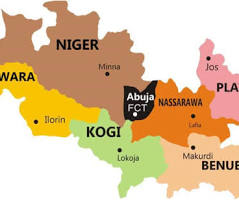
To understand the Middle Belt is to revisit the architecture of colonial Northern Nigeria. Under British rule, the Northern Region was administered through indirect rule that relied heavily on established emirate systems. This strengthened centralized authority within existing hierarchies while incorporating numerous minority communities into a political structure that was not entirely their own. As constitutional reforms expanded participation in the 1940s and 1950s, population strength became decisive in electoral outcomes. Minority leaders across present day Benue, Plateau, Southern Kaduna, parts of Niger, Kogi, and Kwara began to fear that independence might simply transfer dominance from colonial officials to regional elites without altering the balance of internal power.
These anxieties were formally voiced before independence. In 1957, the British government established the Willink Commission of Inquiry to investigate minority fears across Nigeria. Communities from what would later be described as the Middle Belt testified about political vulnerability within the Northern Region. The Commission acknowledged their concerns as genuine but declined to recommend the creation of separate regions, arguing instead that constitutional safeguards would suffice. Recognition came without structural redesign. That choice would echo through subsequent decades.
Out of this climate arose organized political resistance. The United Middle Belt Congress became the principal vehicle for minority assertion within the Northern Region. At its forefront stood Joseph Tarka, whose articulate and often confrontational advocacy gave the agitation national visibility. Yet the movement was never a one man project. It drew strength from Tiv, Idoma, Birom, Angas, Jukun and other minority leaders, clergy, and educated elites who believed that political survival required coordinated voice. Later figures such as Solomon Lar would sustain and symbolize Middle Belt consciousness in subsequent republics, but they stood on foundations laid collectively through constitutional debates and legislative resistance. The movement was not a rejection of the North as geography. It was a rejection of marginalization within a regional power structure.
Independence in 1960 did not immediately dissolve the large regional blocs. The First Republic retained strong regional governments and minority agitation persisted. It was under military rule that Nigeria’s political map changed fundamentally. The creation of states beginning in 1967 fragmented the old Northern Region. Benue Plateau State emerged and was later divided. Further exercises produced Benue, Plateau, Nasarawa, Kogi, Niger, and Kwara as separate entities. State creation expanded local representation and offered minorities administrative control within defined territories. At the same time, it dispersed the collective bargaining leverage that a unified Middle Belt region might have exercised. Autonomy increased, but cohesion thinned.
The adoption of six geopolitical zones in the 1990s introduced another transformation. The Middle Belt became administratively classified as North Central. Supporters argue that this framework institutionalized inclusion within federal appointments and political rotation. Critics contend that it diluted a historically distinct political identity into a broader northern categorization. What began as a movement rooted in minority assertion was gradually absorbed into bureaucratic vocabulary. Whether this absorption resolved or merely reframed the original grievance remains debated.
In recent decades, recurring violence in parts of Benue, Plateau, and Southern Kaduna has reignited intense discourse about land, belonging, and security. Farmer herder conflicts, disputes over indigene and settler status, demographic pressures, economic decline, and failures of security architecture intersect in complex ways. It is intellectually insufficient to reduce these crises to a single narrative of ethnic cleansing or to dismiss them solely as climate driven competition. Yet perception shapes political reality. For many communities in the Middle Belt, contemporary insecurity resonates with older fears of vulnerability within larger political configurations. For others, it reflects a national governance crisis affecting multiple regions beyond the Middle Belt. Both interpretations demand sober, evidence based engagement.
Nigeria’s federal character principle was designed to prevent exclusion by ensuring representation in national institutions. Still, representation does not always translate into influence. Debates persist over whether communities historically associated with the Middle Belt enjoy equitable presence in strategic sectors such as security leadership, economic planning, and infrastructure distribution. These are not merely regional complaints. They are constitutional questions at the heart of any plural federation seeking stability.
Ultimately, the Middle Belt is not simply a regional identity. It is a mirror held up to the Nigerian federation. It asks whether majority rule has been sufficiently balanced by minority protection. It challenges the assumption that administrative renaming resolves political consciousness. It compels a deeper reflection on whether zoning rotates elite access to power without transforming structural inequities. The Middle Belt emerged from a demand for dignity within a dominant regional order. It evolved through constitutional negotiation, electoral competition, state restructuring, and lived experience. It remains unfinished not because geography is unclear, but because the argument about equity continues.
The path forward lies neither in romanticizing separation nor in dismissing historical grievances. It lies in strengthening authentic federalism, clarifying land governance frameworks, reforming security institutions, and cultivating an inclusive political culture that does not equate unity with uniformity. Middle Belt identity need not threaten northern cooperation, and northern solidarity need not require minority silence. A confident federation does not fear layered identities. It accommodates them.
The Middle Belt was not created by cartographers. It was shaped by political memory and collective aspiration. Until Nigeria reconciles power with fairness in ways that are visible and sustained, the Middle Belt will endure not as a transient label, but as a continuing conversation about justice within the federation.
Stephanie Shaakaa wrote from shaakaastephanie@yahoo.com