


By Stephanie Shaakaa
Wars often begin with bravado.
Leaders promise quick victories. They speak in the language of strength, certainty and destiny. The enemy is weak. The mission is clear. The outcome is inevitable.
Then reality arrives.
And suddenly the same leader who sounded so certain begins making phone calls.
That is the moment we appear to be witnessing now.
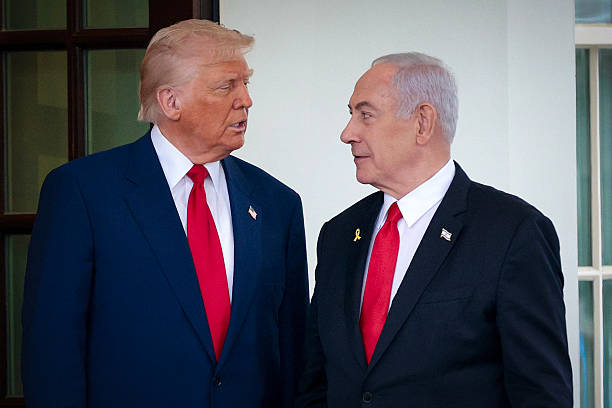
After launching strikes against Iran and escalating a confrontation that many analysts warned could spiral across the Middle East, Donald Trump is now urging other countries to step in and help secure the Strait of Hormuz, the narrow strip of water through which a staggering portion of the world’s oil supply travels.
The request is framed politely as cooperation. A team effort. A shared global responsibility.
But beneath the diplomatic language lies a far simpler truth.
Wars that look easy at the beginning rarely stay that way.
Iran understands something that great powers sometimes forget. It does not need to defeat the United States on a battlefield to complicate American strategy. It simply needs to make the conflict messy, unpredictable and expensive.
And the Persian Gulf offers Tehran the perfect geography to do exactly that.
Just off its coast sits the Strait of Hormuz, one of the most sensitive economic chokepoints on the planet. Tankers carrying oil and natural gas from Saudi Arabia, Kuwait, Qatar and the United Arab Emirates must pass through this narrow corridor before reaching global markets.
The world economy moves through that waterway every single day.
That is leverage.
Iran does not need to sink ships to create panic. The mere threat of disruption can send insurance premiums soaring and energy prices climbing within hours. Traders react. Governments worry. Markets shudder.
Suddenly what began as a military confrontation starts to look like a global economic risk.
This is where the strategic equation changes.
If the United States handles the crisis alone, it becomes responsible for protecting shipping lanes, deterring Iranian retaliation and stabilizing a vital artery of the global economy. That is a massive and expensive task, even for a superpower.
So Washington turns outward.
Other navies are asked to patrol the Gulf. Allies are encouraged to contribute ships, intelligence and political support.
In effect, a conflict that began as a demonstration of American resolve becomes something else entirely.
A search for partners.
There is nothing unusual about coalition warfare. Throughout modern history the United States has relied on alliances to project power and share burdens.
But alliances operate on trust.
And trust cannot be summoned instantly when a crisis begins to spiral.
Many governments are looking at this confrontation with caution. Some see it as a conflict triggered by a series of escalations that did not require a full scale war. Others worry that deeper involvement could pull them into a regional struggle with no clear endpoint.
Because that question still hangs in the air.
What exactly is the objective?
Is the goal to weaken Iran’s military? Force political concessions? Collapse the regime? Or simply demonstrate that Washington will respond to any perceived threat with overwhelming force?
Wars without clear destinations tend to make allies nervous.
There is also an uncomfortable irony here.
For years, the same international alliances now being called upon were treated with suspicion, even hostility. Trade disputes erupted. Long standing partners were scolded for not spending enough on defense. Multilateral institutions were dismissed as burdens.
Now, in the middle of a dangerous confrontation, those same alliances suddenly look essential again.
Geopolitics has a way of humbling everyone.
The United States remains the most powerful military force on earth. No one seriously disputes that. But raw military power is only one part of modern influence.
The other part is legitimacy.
When other nations believe a conflict serves a broader international interest, they join willingly. When they believe it serves the ambitions of a single leader or a single government, enthusiasm fades quickly.
And that may be the deeper story unfolding in the Gulf.
A war that began with confidence is now colliding with the complicated realities of geography, economics and diplomacy.
Iran cannot match the United States in conventional military strength. But it does not have to.
All it has to do is keep the crisis alive long enough for the rest of the world to ask a simple question.
Whose war is this, really?
Because great powers can start wars alone.
But they rarely finish them that way.
Stephanie Shaakaa writes from shaakaastephanie@yahoo.com