







By Stephanie Shaakaa
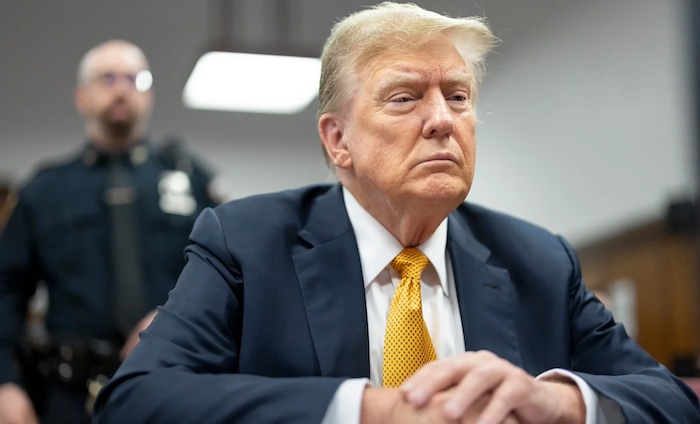
Donald Trump stood before American crowds in the run-up to the November 3, 2026 midterm elections and repeatedly urged voters to pretend he was on the ballot, he was doing more than encouraging Republican supporters to turn out. He was asking Americans to treat the election as a personal endorsement of his presidency, his second-term agenda and his style of leadership. He wanted the results to demonstrate that his political influence remained as formidable as ever.
Instead, millions of American voters appeared to take him at his word. They looked at the invitation and delivered an answer he may not have anticipated.
The political irony arrived swiftly. Confronted with a Democratic victory that handed the opposition control of both chambers of Congress, Trump reached for an explanation that placed considerable distance between himself and the outcome. In a post on his Truth Social platform, he declared: “I wasn’t on the Ballot and if I was, we would have won IN A LANDSLIDE!”
That contradiction is the real political story of the 2026 midterms. A president who had spent weeks asking Americans to vote as though he were a candidate was now reminding them that he had not actually been one. He had made himself the centre of the election, encouraged his party to measure its fortunes against his popularity and then sought to distance himself from the result when the verdict went against his candidates.
He turned a congressional election into a referendum on his presidency and, when the answer came back unfavourably, appeared reluctant to accept what that referendum meant.
To appreciate the significance of what has happened, particularly for readers outside the United States, it is important to understand what American midterm elections represent and why they matter.
The American political system is built around a separation of powers. The president heads the executive branch, while Congress, the legislative branch, consists of two chambers: the House of Representatives and the Senate. The president is elected every four years, but congressional elections take place every two years. Consequently, Americans return to the polls halfway through a president’s four-year term to elect members of Congress. These elections are called midterms because they fall between presidential elections.
All 435 seats in the House of Representatives are contested every two years. Members serve two-year terms, meaning that every seat is available at each congressional election. The Senate operates differently. Its 100 members serve six-year terms, with their tenures staggered so that approximately one-third of the chamber is elected every two years.
This distinction is important. Americans do not elect a president and then surrender their opportunity to influence the direction of government until the next presidential election. Through midterms, they can change the composition of Congress, strengthen the president’s party or give the opposition control of the legislature.
The party controlling the House and Senate has considerable influence over legislation, government spending, congressional investigations and the confirmation of certain presidential appointments. Control of Congress therefore has practical consequences for how much room a president has to implement his programme.
Midterms have historically been difficult for the party occupying the White House. Voters often use them to express dissatisfaction with the administration, while opposition supporters become more motivated to participate. The result is frequently a loss of congressional seats for the president’s party. They are, in effect, a national report card on the administration’s performance, although local concerns and individual candidates also play important roles.
But 2026 was more than an ordinary midterm correction.
By repeatedly insisting that voters treat the election as a direct verdict on his presidency, Trump nationalised contests that would otherwise have been decided on a combination of local issues, individual candidates and constituency interests. He effectively removed much of the political distance between himself and Republican candidates across the country. Their fortunes became increasingly tied to his own.
This is where the phenomenon of political coattails becomes particularly relevant. Ordinarily, a popular president can help candidates from his party win elections by transferring some of his popularity to them. The reverse can also happen. When a president becomes an electoral liability, candidates associated with him can suffer the consequences. Political analysts describe this as negative coattails or reverse coattails.
Trump’s intervention created precisely that vulnerability. Instead of lifting Republican candidates across the finish line, his high-profile involvement helped turn them into representatives of an administration against which dissatisfied voters wanted to register their objections. The election became less about the individual merits of every candidate and more about the national political direction Trump had asked Americans to endorse.
The result was a sweeping Democratic victory. Democrats secured control of both the House of Representatives and the Senate, reversing the Republican hold on Congress. Their gains included Senate victories in states that had long been difficult territory for the party, alongside substantial advances in House contests. The Associated Press described the outcome as a sweeping rebuke of Trump and his party.
Economic anxiety, the cost of living, dissatisfaction with government policies and concerns about the direction of the administration all featured in the political environment surrounding the election. The results also reflected the mobilisation of voters who wanted a different direction for the country. It would be simplistic to attribute the outcome to one issue or one section of the electorate, but the cumulative effect was unmistakable: Republican candidates were made to answer for a presidency Trump himself had placed at the centre of the contest.
Nowhere was this political reversal more striking than in Texas.
For decades, Texas had been one of the Republican Party’s most dependable strongholds. Democrats had not won a statewide election there since 1994, and their last victory in a Texas Senate election came in 1988. The state had become so closely associated with Republican politics that a Democratic victory in a major statewide contest was often treated as an improbable proposition.
Yet the 2026 election produced a result that challenged that assumption.
James Talarico, a 37-year-old state representative, former middle-school teacher and Presbyterian seminarian, defeated Republican Attorney General Ken Paxton in the contest for the United States Senate. His campaign placed considerable emphasis on economic pressures, ethical leadership, political accountability and the everyday concerns of ordinary Texans.
Rather than allowing the contest to become exclusively about ideological differences, Talarico sought to connect with voters through issues affecting their daily lives. He challenged the influence of wealthy political interests and the political establishment, presenting the election as a contest between powerful interests and ordinary Americans who wanted their concerns taken seriously.
His message found an audience in a state where economic pressures and dissatisfaction with political leadership had become important electoral considerations. Paxton, who enjoyed Trump’s backing and considerable national Republican support, faced a challenger who sought to make the contest about more than party loyalty.
The campaign was fiercely contested, attracting substantial fundraising, political advertising and outside expenditure. Talarico’s appeal to ordinary voters should not be mistaken for an absence of big-money campaigning. Both sides spent heavily to influence the outcome. But the eventual result demonstrated that money, presidential endorsement and established party loyalties could not guarantee a Republican victory.
When the votes were counted, Talarico emerged victorious, becoming the first Democrat elected to a Texas Senate seat since 1988. The victory ended a Republican winning streak of nearly four decades in Senate contests in the state.
Texas also witnessed another remarkable development. Democrat Gina Hinojosa defeated incumbent Republican Governor Greg Abbott, becoming the state’s first Latina governor and ending Republican control of the governorship, which had lasted since 1994.
The significance of these victories goes beyond the candidates themselves. Texas remains a politically complex state with a substantial conservative electorate, and one election does not automatically transform its political identity. Nevertheless, the results demonstrated that even deeply entrenched political loyalties can be challenged when dissatisfaction with the governing party converges with local economic concerns and the appeal of individual candidates.
The idea of Texas as an unquestionable Republican stronghold has consequently become much harder to defend.
The electoral upheavals were not confined to Texas. Across the country, voters delivered victories that broke longstanding political barriers and produced historic firsts in American political representation.
In Georgia, former Atlanta Mayor Keisha Lance Bottoms won the governorship, becoming the first Black woman elected governor in American history. Her victory was particularly significant in a state that has become increasingly competitive in national elections. It also marked a major breakthrough in the representation of Black women in the highest executive offices of American state governments.
In the House of Representatives, Democratic Minority Leader Hakeem Jeffries is positioned to become the first Black Speaker of the House if formally elected by the incoming Democratic majority. His potential elevation would mark another important milestone in American political history. However, winning control of the chamber does not automatically confer the speakership. Members of the House must elect their Speaker.
The Senate also recorded historic breakthroughs. In New Hampshire, Democrat Chris Pappas won his Senate race, becoming the first openly gay man elected to the United States Senate. His victory adds another dimension to the changing composition of a chamber that has historically been dominated by a much narrower range of political and social representation.
In Michigan, Dr. Abdul El-Sayed won the Senate contest, becoming the first Muslim elected to the United States Senate. A physician and former public health official, El-Sayed campaigned on healthcare affordability, economic fairness, campaign finance reform and civil rights. His victory was particularly significant because it brought questions of economic inequality, religious representation, foreign policy and minority rights into the wider conversation about American political leadership.
Taken together, these victories reveal the breadth of the coalition behind the Democratic resurgence. Young voters, working-class families, suburban moderates and minority communities all featured in the changing electoral picture. However, it would be simplistic to attribute the entire outcome to one demographic group or assume that every voter who supported a Democratic candidate did so for the same reason. The election reflected a combination of economic concerns, dissatisfaction with the administration, candidate-specific appeal and a desire among many voters to restore a measure of institutional balance.
Crucially, these results do not necessarily signal a permanent partisan realignment, nor do they establish the extinction of the so-called safe state. American electoral politics is too fluid for such sweeping conclusions to be drawn from a single midterm election. The traditional difficulty faced by the president’s party during midterms remains an important part of the explanation. A sharp electoral correction should not automatically be mistaken for an enduring transformation of the country’s political identity.
But the institutional consequences of the 2026 results are immediate.
With Democrats controlling both chambers of Congress, Trump’s legislative agenda faces a substantially different environment. Bills that previously might have enjoyed relatively smooth passage through a Republican-controlled legislature will now encounter an opposition majority. Congressional investigations into the administration can intensify, executive appointments will face greater scrutiny, and the president will have to contend with lawmakers who are not necessarily interested in advancing his priorities.
The Senate majority gives Democrats greater influence over confirmation proceedings, while control of the House places them in a position to determine its legislative agenda and exercise congressional oversight. The president retains his constitutional powers, including the ability to veto legislation, but governing without congressional cooperation becomes considerably more complicated.
This is not the same as removing Trump from office or stripping him of his constitutional authority. He remains president, commands the executive branch and retains considerable powers. But the political environment in which he must exercise those powers has changed. A president who once enjoyed the advantage of a Congress controlled by his party must now negotiate with an opposition that has its own political priorities and every incentive to scrutinise his administration.
The results also raise questions about the future of the Republican Party and Trump’s continuing influence over it. For years, his endorsement has been a powerful instrument in Republican politics. Candidates have sought his support, elected officials have adjusted their positions to accommodate his preferences, and the party has increasingly organised itself around his political identity.
The midterms have brought a difficult question into sharper focus: can a political figure remain an electoral asset to his party when candidates associated with him are losing contests they once expected to win?
The answer will matter considerably as Republicans begin to consider their direction beyond Trump’s second term and the political contest leading towards 2028. His influence is unlikely to disappear overnight, but the results have given his critics within the party fresh grounds to question the political cost of tying every Republican candidate to his personal fortunes.
American voters have a long history of resisting excessive concentrations of political power. The country’s constitutional arrangement was designed to prevent any one branch of government from exercising unchecked authority. Midterm elections provide one of the clearest opportunities for citizens to alter the balance of power without waiting for another presidential election.
When one party controls the White House, the House and the Senate, it has considerable room to advance its legislative programme. But that arrangement is never guaranteed to last. Voters can change the composition of Congress, and the president must govern within the constitutional limits of the office.
By repeatedly telling Americans to pretend he was on the ballot, Donald Trump handed the electorate a single, unmistakable political question. They answered it, not by voting on a presidential candidate, but by voting on the president already occupying the White House.
That is what makes his reaction so revealing. He had personally attached his political fortunes to the results, encouraged supporters to treat the midterms as a test of his popularity and made Republican victories a measure of his influence. Yet, when the outcome went against his party, he sought to explain the defeat by pointing out that his name was not on the ballot.
The contradiction is difficult to escape. A president cannot ask the electorate to treat an election as a referendum on his leadership when victory appears possible and then argue that the same election says little about him when the verdict is unfavourable.
The 2026 midterms may not mark the end of Trump’s political influence, and they do not guarantee that Democrats will retain their advantage in future elections. But they have demonstrated that presidential popularity cannot be assumed, political loyalty is not unconditional, and the electorate retains the power to alter the balance of government.
The slingshot has turned in the opposite direction.
Trump wanted Americans to vote as though he were on the ballot. They did something more consequential: they voted on the presidency he was already exercising. And when the verdict arrived, he discovered that his name did not need to appear on the ballot for his leadership to be judged.