
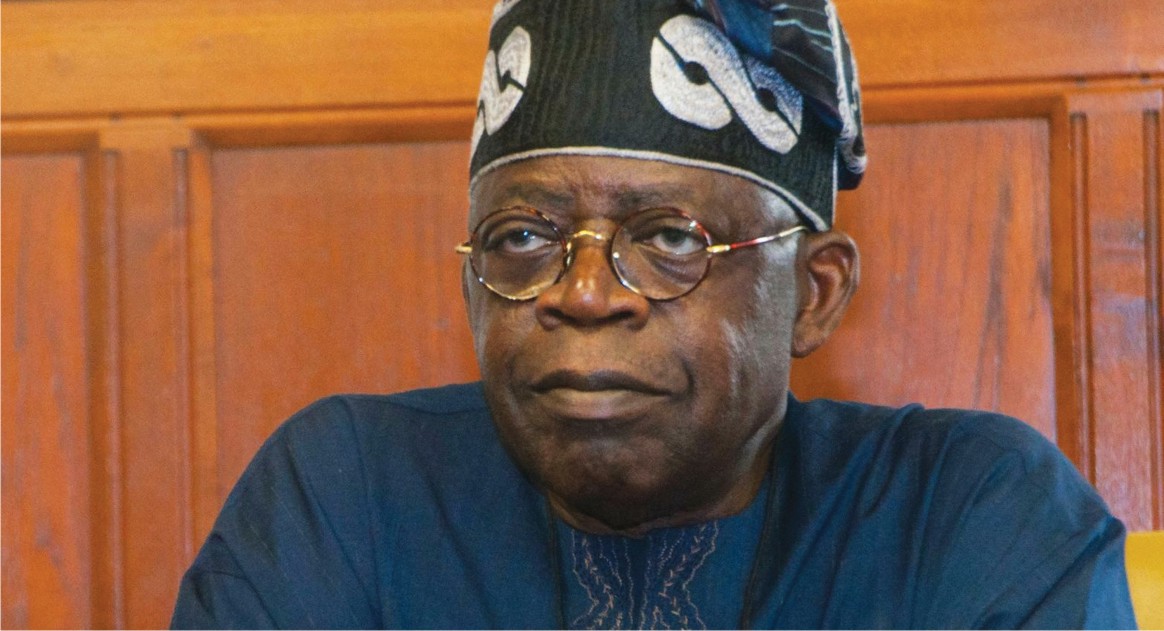









In this interview, Dr Alex Adum, former Attorney General and Commissioner of Justice in Benue state; a chieftain of the opposition African Democratic Congress speaks on a wide range of issues affecting his home state Benue and Nigeria at large.
What is your reaction to the recent senate decision to amend the Electoral Bill which many people believe did not go far enough in addressing our electoral challenges?
The amendment is being marketed as reform, yet in substance it preserves the very ambiguity that has undermined electoral credibility in Nigeria. The Supreme Court’s interpretation in Atiku Abubakar v INEC (2023) already diluted the binding force of electronic transmission under the Electoral Act 2022.
Rather than curing that defect, the Senate unlike the House of Representatives has now codified it.
By empowering the Independent National Electoral Commission (INEC) to transmit results electronically while simultaneously permitting manual fallback in cases of “network failure,” the law creates a loophole wide enough to drive electoral malpractice through. In a country where network gaps are predictable, and sometimes conveniently invoked, this fallback clause becomes a strategic escape hatch.
If the Federal Government, under the All Progressives Congress truly desires electoral integrity, it must legislate certainty, not discretion. Electronic transmission should be mandatory, reinforced with technological redundancy such as satellite backup systems and real-time public viewing portals.
Democracy cannot be built on conditional transparency. It must be full transparency and the law must prohibit the manual transfer of results in whatever guise.
To this extent, it must make the electronically transferred results the primary source of collation and provide severe penalties and consequences for failure including nullification of results in such polling units.
Recently, a Makurdi High Court Ruled against Governor Alia’s Public Order which many people believe was intended to stifle opposition. How do you react to that ruling?
The decision of the High Court of Benue State is more than a legal correction; it is a constitutional reminder. Governor Hyacinth Alia’s directive, which effectively restricted freedom of movement and assembly, reflected a troubling expansion and overreach of executive authority.
Section 41 of the Constitution guarantees freedom of movement. Section 40 guarantees freedom of association. These are not privileges dispensed at the discretion of a governor; they are entrenched constitutional rights. When executive directives encroach upon these liberties without legislative backing or a clear emergency framework, the courts must intervene, and rightly so.
Governance must never descend into personalized rule. The symbolism of that judgment is profound: Benue State remains governed by law, not by decree. I hope the court’s decision would serve as a good guide in all subsequent executive overreach by the APC led administration.
There have been allegations that the Benue state governor has been very opaque in terms of its finances and spending. Do think the state government has been sufficiently transparent in its dealings?
Transparency is not proclaimed; it is demonstrated. When procurement processes are opaque, budget performance reports irregular, and local governments are financially subordinated, public suspicion becomes inevitable.
Government is anchored on due process and the rule of law. Governance is a public trust, not a private estate. Established procedures must be upheld as sacrosanct. A government cannot be run as though it were personal property, flouting due process with impunity.
Despite revenue receipts exceeding one trillion naira from FAAC, IGR, and other sources, there remains a troubling gap between revenue and measurable results. Fiscal governance in Benue has yet to meet the standards of open government. Internally generated revenue data, security votes, and capital allocations remain largely shielded from meaningful public scrutiny.
Persistent allegations of inflated contracts, over-invoicing, and non-competitive procurement — often awarded behind closed doors — raise legitimate concerns about value for money. When contractors of questionable pedigree secure projects without transparent tendering consistent with the state’s Public Procurement Law, citizens are entitled to ask hard questions.
As an opposition party, the African Democratic Congress insists that public funds must be traceable, measurable, and accountable. Opposition is not hostility; it is democratic responsibility. Governance cannot thrive on faith alone; it must rest on verifiable transparency.
It appears that with the problem ravaging the Peoples Democratic Party, your party, the ADC appears to be the major opposition group in Nigeria. Do you think it has the required momentum to wrest power from the Ruling Party in 2027?
Nigeria’s political terrain is shifting. Economic hardship, currency instability, and persistent insecurity have eroded the myth of incumbency as inevitability.
The ADC is building quietly but strategically: strengthening grassroots structures, attracting technocrats, and consolidating reform-minded coalitions. Unlike the other legacy parties sustained primarily by patronage networks, the ADC’s appeal lies in credibility and policy clarity.
By 2027, the contest will not be between familiar names but between exhausted governance and renewed alternatives. Momentum is not measured by noise but by organization, and the ADC is organizing deliberately.
The 2027 election will ultimately be a referendum not merely on partisanship but on the incumbent’s performance. And we are confident that Nigerians will choose institutional reform represented by the ADC over institutional fatigue or lethargy represented by APC.
There have been allegations that your state, Benue is governed more like a Parish than a state. Do you agree with this summation?
Perception often mirrors experience and reality. When policy formulation appears centralized within a narrow circle, dissent is discouraged, and stakeholders feel excluded, governance begins to look insular.
Governor Hyacinth Alia’s clerical background commands moral respect. However, democratic administration demands broad consultation beyond any ecclesiastical framework.

A state is not a congregation; it is a constitutional entity comprising diverse political, ethnic, social, and economic interests.
Institutions, not personalities, must define governance. Since May 29, 2023, the critical question remains: what level of inclusive, multi-stakeholder participation has been institutionalized in Benue State?
As Abraham Lincoln famously declared at the Gettysburg Address, democracy is the government of the people, by the people, and for the people; not the government of one man, by one man, for himself.
Electoral victory confers a mandate to govern democratically, not exclusively. This is because the governor is not a sole administrator and two heads are always better than one. So in the absence of inclusive governance, I am totally on the same page with those who describe the current situation as private enterprise governance or Parish House arrangement.
There have been quite some high profile defections to the All Progressive Congress with the latest being the former Governor of Benue state, Gabriel Suswam. Are you not worried?
Senator Gabriel Suswam’s movement underscores the fluidity of Nigeria’s political class. Defections are often strategic recalibrations rather than ideological transformations.
However, the electorate is becoming more discerning. Political migration without policy reorientation no longer guarantees advantage.
What Benue people demand is improved security, economic revitalization, infrastructure renewal, and accountable leadership. Whether this defection meaningfully advances those objectives remains to be seen.
Ultimately, 2027 will not be decided by elite alignments but by public judgment, both of the Benue State Government and of the Federal Government under the All Progressives Congress.
It is also important to stress that across all these issues, electoral reform, executive restraint, minority protection, fiscal accountability, and party competition — the central question is institutional integrity.
Are we strengthening democratic institutions, or personalizing power?
The ADC stands firmly for institutional democracy, constitutional fidelity, and transparent governance. And we believe that this commitment resonates deeply with the present aspirations of Nigerians, hence they will vote for change in 2027.