








BY ADIKWU MOSES EGWA
This article examines the claim that the Tiv people are “the oldest Nigerian and Cameroonian tribe” who built the “first Bantu settlement in 6,000 BC.” Using simple language, it checks this claim against academic history, archaeology, linguistics, and written records from Nigeria and abroad. The findings show there is no proof in books, digs, or old reports to support a 6,000-year Tiv presence in Nigeria. Instead, records show the Tiv entered Nigeria about 200 years ago as refugees from the Congo region during the time of slave raids and later King Leopold II’s rule in the Congo (1885–1908). Nigeria’s recorded history names four major empires before 1900: Kwararafa, Oduduwa/Yoruba states, Borno, and Benin, with Sokoto added after 1804. The word “Tiv” did not appear in writing until the early 20th century. The 6,000-year story has no academic, archaeological, or anthropological support. This false narrative affects Nigeria’s history, misleads young Tiv people, and creates trouble with neighboring states.
History needs proof. Proof means old books, old buildings, old names written by people who lived at the time, and things dug from the ground. When we check Nigeria’s past, we find strong proof for some kingdoms and very little for others.
Four empires are named again and again in old records kept in London, Kano, and Timbuktu: (1) Kwararafa, (2) Oduduwa/Yoruba states, (3) Borno, and (4) Benin. After 1804, Sokoto also became a large empire (Last, 1967). These places had kings, capital cities, armies, and were written about by Arab and European visitors from the 1400s onward.
Today, some writers say the Tiv people built the first Bantu settlement in 6,000 BC, had a capital at Garoua, moved to Jimeta, then to Swem Mountain, and had 800,000 people. They say Tiv history was “buried” and that the “Battle of Karagbe” tells the truth. This article will look at each point, step by step, and compare it with what we know from history, archaeology, and language study.
1. The Four Empires with Written and Physical Proof
1.1 Kwararafa
Kwararafa was a strong state in the Benue Valley. Leo Africanus, writing in 1526, named “Corarapa” as a kingdom south of the Hausa states (Leo Africanus, 1526). The Kano Chronicle, written before 1900, said Kwararafa fought Kano many times (Palmer, 1928). The Jukun people led Kwararafa. Their king is called Aku Uka, and Wukari was a main town (Meek, 1931). Archaeologists found old walls and pottery in the Benue area linked to Kwararafa (Sutton, 1979).
1.2 Oduduwa/Yoruba States
Ife and Oyo are Yoruba states. Ile-Ife has bronze heads dated to the 12th century AD (Willett, 1967). Oyo had a king called Alaafin and a big cavalry by 1600 (Law, 1977). A Scottish traveler, Clapperton, visited Oyo in 1826 and described its size (Clapperton, 1829).
1.3 Borno
Borno grew from Kanem near Lake Chad. Its kings wrote in Arabic from the 1200s. The Diwan is a king list from 1200 AD (Palmer, 1936). German traveler Barth saw the capital Kukawa in 1851 with walls and a court (Barth, 1857).
1.4 Benin
The Portuguese reached Benin in 1485. They wrote about the Oba, his palace, and trade (Ryder, 1969). The Benin walls are 16,000 km long, built between 800–1500 AD (Connah, 1975). Benin bronze art is in museums in London today.
1.5 Sokoto
After 1804, Usman dan Fodio set up the Sokoto Caliphate (Last, 1967). It had emirs, Arabic records, and a capital at Sokoto (Johnston, 1967).
These five states have dates, names, and objects we can see. That is why historians say they “made history.”
Checking the Tiv 6,000-Year Claim Point by Point
Claim A: “Tiv built the first Bantu settlement in 6,000 BC.”
Dispute: Archaeology in Nigeria and Cameroon has found no “Bantu settlement” dated to 6,000 BC. The word “Bantu” means a language family, not a city. The first farming villages in the Benue Valley date to about 500 BC–300 AD, like Nok culture (Fagg, 1977). No dig has found a Tiv city from 6,000 BC. If Tiv built a settlement 8,000 years ago, we should see pottery, houses, or graves. We do not (Shaw, 1978).
Claim B: “Tiv built their first capital at Garoua after they discovered River Benue and Niger.”
Dispute: Garoua is in Cameroon. It was a Fula and Bata town in the 1800s (Kirk-Greene, 1958). No Arab, German, or British report before 1900 says Tiv ruled Garoua. Yet In Jukun, Benue comes from Binuwe, which means ” follow river come.”
It was the name the Jukun people used for the River Benue long before Europeans arrived. The name later became the official name of the river and the state. From the Europeans.
The River Benue was named by Europeans in the 1800s from the Bantu word benue, meaning “mother of waters,” used by many groups, not only Tiv (Johnston, 1919).
The Niger was called Kwara by locals for centuries. There is no map before 1900 showing a “Tiv capital” at Garoua.
Claim C: “Tiv marked their territory in the Middle Belt, Cameroon, and Cross River.”
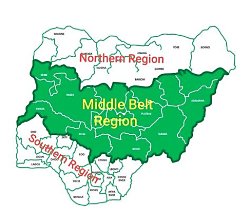
Dispute: Old maps of the 1800s show the Middle Belt held by Kwararafa, Igala, Idoma, and others (Crowder, 1978). The first British officers who entered the Benue area in 1900 met the Tiv as farmers with no central chief (East, 1937). If Tiv “marked” a large territory, why did no neighbor record it? The Jukun, Igala, and Chamba have oral histories of wars with Tiv as newcomers in the 1800s (Meek, 1931).
Claim D: “Capital moved to Jimeta, then to Swem Mountain for 800,000 people.”
Dispute: Jimeta is a town near Yola, set up by Fulani in the 1800s (Kirk-Greene, 1958). No record says Tiv ruled it. Swem is a hill in Cameroon. British officer R.C. Abraham visited it in the 1930s. He said it was a small shrine, not a city (Abraham, 1940). 800,000 people need water, farms, and houses. A city that big leaves ruins. No ruins exist at Swem (Shaw, 1978). The first census of Tiv by British in 1921 counted 300,000 people, not 800,000 in one city (East, 1937).
Claim E: “Tiv armies returned to reclaim land; this was the Bantu Migration.”
Dispute: The Bantu Migration is a language spread that started 3,000–4,000 years ago, not a Tiv army (Vansina, 1990; Ehret, 2001). It moved from Cameroon east and south, not from Nigeria outward. It was farmers with iron and pots, not one army (Blench, 2006). To say Tiv led it is not supported by any linguist. Wilhelm Bleek did not misspell “Tiv” as “True People.” Bleek wrote in 1858 and used “Bantu” meaning “people” in many languages (Bleek, 1862).
Claim F: “Tiv absorbed tribes and opened borders in the 1400s when Europeans kidnapped people.”
Dispute: Europeans reached the coast in the 1400s, but the first record of Tiv is from 1854 when Dr. Baikie met them on the Benue (Baikie, 1856). Baikie called them “Munchi.” There is no record of Tiv having power in the 1400s. If Tiv protected 300 tribes, the Portuguese, Dutch, or English would have written it. They did not.
Claim G: “20 tribes now use Tiv language, including Iyion, Etulo, Abakwa, Injoo.”
Dispute: Etulo and Abakwa speak their own languages, not Tiv (Williamson, 1971). Some small groups near Tiv borrow Tiv words because of trade, but they do not “adopt Tiv as official language” (Blench, 1999). Nigeria’s government does not list Tiv as official for 20 tribes (Federal Republic of Nigeria, 2006).
Claim H: “Recent expeditions in Akwaya show Tiv capital at Swem Hill.”
Dispute: No academic paper or museum report shows a city at Swem. Cameroon’s Ministry of Culture has no record of a Tiv capital there (Nkwi, 1989). If an expedition found it, it would be in journals like West African Journal of Archaeology. It is not.
Claim I: “Tiv migration was 10,000 years before Jesus.”
Dispute: 10,000 years before Jesus is 12,000 years ago. At that time, all humans in West Africa were hunters, not farmers (Shaw, 1978). There were no tribes with names we know today. Language groups like Bantu formed after 2000 BC (Ehret, 2001). So Tiv as a group could not exist 12,000 years ago.
Why Tiv Are About 200 Years in Nigeria
The Name “Tiv” Is New
R.C. Abraham, the first man to write a Tiv dictionary, said the people did not call themselves Tiv. Hausa called them “Munchi,” and Jukun called them “Michi” (Abraham, 1933). The first time “Tiv” appears in print is 1911 in British reports (East, 1937). A 6,000-year-old nation would have its name in Arab books from Kano or Borno. It does not.
No King, No Capital, No Walls
All old states had a king and a main town. The British met Tiv in 1900 and said they had no chief for all Tiv (East, 1937). Each clan had its own elder. The British had to create the Tor Tiv in 1946 to rule them (Bohannan, 1953). If Tiv had a capital for 6,000 years, where are the walls? Benin’s walls are still there. Kwararafa’s city Wukari is still there.
Oral History Talks of Recent Coming
Tiv elders told Abraham in 1933 that they came from the southeast, from a place called “Swem,” after wars (Abraham, 1940). They named groups they fought: Ugenyi, Chamba, Jukun. Jukun and Chamba also say Tiv came late and took land (Meek, 1931). This fits a 1800s migration.
The Congo Link and King Leopold II
From 1885–1908, King Leopold II ran the Congo Free State with great cruelty (Hochschild, 1998). Millions ran away. Before him, Arab and Chokwe slave raids from the 1700s pushed many groups west (Vansina, 1990). Tiv language is Bantoid, close to languages in Cameroon and Congo (Greenberg, 1963). So Tiv likely moved west as refugees in the 1700s–1800s, reaching the Benue about 200 years ago. This is why no European saw them before 1854.
The Problem with False History
Effect on Nigeria’s History
When one group makes a claim with no proof, it confuses students and teachers. Nigeria’s history books use dates and digs. If we allow stories with no proof, then all history breaks down.
Effect on Young Tiv People
Young people need truth to plan their future. If they are told they had a city of 800,000 in 6,000 BC, but see no proof, they may lose trust in elders. They may also fight neighbors because they think the land was “always theirs.”
Trouble with Neighbors
Land fights in Benue, Taraba, and Nasarawa have killed many since 1990 (Alubo, 2006). Some of these fights start because of history claims. Jukun say Tiv are latecomers. Tiv say they are the oldest. Without proof, peace is hard. Courts use old maps and reports. Those maps do not show a Tiv empire.
What Real Records Say: First written mention: 1854, by Dr. Baikie on the River Benue (Baikie, 1856); The first census of Tiv by British in 1921 counted 300,000 people, not 800,000 in one city (East, 1937); First central chief: Tor Tiv created by British in 1946 (Bohannan, 1953); Archaeology: No Tiv city found before 1900 (Shaw, 1978); Linguistics: Tiv split from other Bantoid languages about 1,000 years ago, not 8,000 (Blench, 1999).
None of these facts support a 6,000-year kingdom.
The claim that Tiv built a Bantu settlement in 6,000 BC and ruled from Garoua to Swem has no support in academic books, digs, or old writings. The four empires with real proof in Nigeria are Kwararafa, Oduduwa/Yoruba, Borno, and Benin, plus Sokoto after 1804. The word “Tiv” is only 100 years old in writing. Tiv had no king, no capital, and no city before 1900. Their own oral history and language links point to a move from the Congo region about 200 years ago, as refugees from slave raids and King Leopold II’s time. False history harms Nigeria and the Tiv people. Young people should learn from real books so they can live in peace with neighbors.