




The International Labour Organisation (ILO) has identified inadequate funding as a major obstacle to expanding social protection in Sokoto State, urging the State House of Assembly to make dedicated budgetary provisions for vulnerable residents and strengthen oversight of government spending.
The organisation warned that without sustained domestic financing, millions of poor households, particularly informal-sector workers, risk remaining excluded from essential social protection services, including healthcare and other basic social assistance.
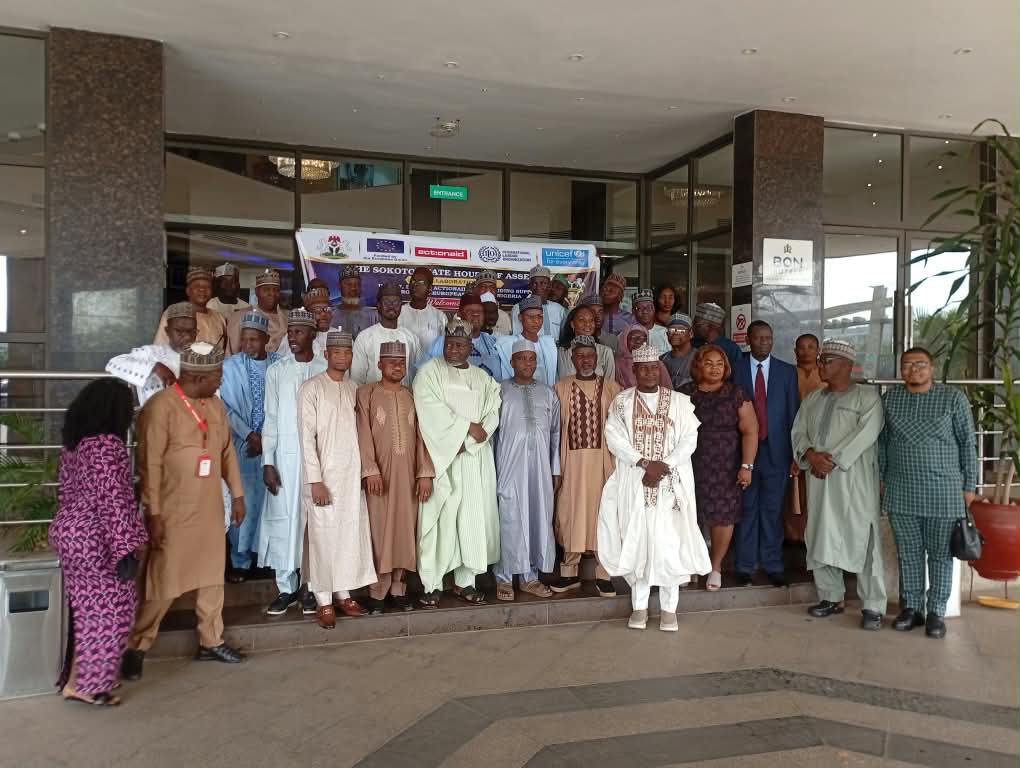
ILO Country Director, Vanessa Phala, stated this at a two-day capacity-building workshop on budget scrutiny, fiscal accountability, digital oversight and social protection coherence for members and key staff of the Sokoto State House of Assembly on Tuesday in Abuja.
Phala, who described social protection as a fundamental pillar of social justice and the decent work agenda, said lawmakers had a critical responsibility to ensure that budgetary commitments translated into actual services for the people.
She said: “The major gap is around funding. Social protection is about making available resources because one element is about assistance, but another element is about insurance.
“In states like Sokoto, where you have high prevalence of poverty, you do need resources.”
Phala challenged lawmakers to identify and protect specific budget lines for social protection interventions, particularly those addressing poverty, inadequate healthcare and the needs of vulnerable communities.
The ILO director stressed that social protection was not merely a welfare intervention but an essential mechanism for protecting workers and vulnerable populations against economic and social risks.
“That’s why we are saying in the budgeting processes of the state, members of the House should be able to identify budget lines in the budget of the state to see what are we going to commit to make sure that we address the fundamental issues facing poor persons, access to basic needs, access to healthcare and access to services that will really support the most vulnerable communities in the state.
“Social protection is an element of social justice. When we talk about the decent work agenda in the ILO, social protection is a pillar of the decent work agenda.
“Social protection is a mechanism where we are able to catch the vulnerable. It’s a mechanism where we are able to build a bridge to reach those that are mostly in need of social assistance and social insurance.”
Phala disclosed that the intervention was being implemented in four states, Sokoto, Abia, Oyo and Benue, with the aim of developing workable models that could eventually be replicated in other parts of the country.
“We can’t be in all the 36 states, but we want to make sure that we start somewhere and build something that can hopefully be replicated in other states.”
Phala further disclosed that the ILO had trained personnel across Sokoto’s 23 local government areas through its TRANSFORM social protection capacity-building programme, equipping them with skills to design, implement and monitor interventions.
The ILO, she added, had partnered with the National Bureau of Statistics to generate data on social protection coverage, identify populations excluded from existing interventions and determine how best to reach them.
“When you are in a position of informing policy, designing policy and implementing policy, you don’t do so from nowhere. You do so from data, because data tells you what is needed, data tells you where to go and to what extent you can go,” she added.
Also speaking, UNICEF’s Chief of Social Policy, Dr. Moses Sichei, raised the alarm over the scale of poverty and deprivation in Sokoto, disclosing that nine out of every 10 residents were multidimensionally poor, making the state the worst affected in Nigeria.
He further disclosed that five out of every 10 children in the state were malnourished, while only two per cent of residents had health insurance.
“Nine in 10 people are multidimensionally poor in Sokoto. The highest in Nigeria. That is very serious.
“Five in 10 children are malnourished. Nationally, about 14.8 per cent of the population are covered by any form of social assistance, while only two per cent of Sokoto residents have health insurance.”
Sichei described the figures as a reflection of the urgent need for stronger government intervention, stressing that behind every statistic was a child whose future depended on decisions taken by the state.
The UNICEF official urged the Assembly to pass the proposed Sokoto State Social Protection Bill when presented, noting that the revised state social protection policy was advancing towards consideration by the State Executive Council.
“Policy sets the vision, intent and guiding principles, while law translates that vision into enforceable, permanent and mandatory rules.”
He also called for dedicated and protected budget lines for social protection under the state’s 2027 budget and the 2027–2029 Medium-Term Expenditure Framework, warning that declining donor financing made domestic resources increasingly important warning that,
“As donor financing declines, domestic resources must increasingly sustain these programmes.”
He further urged lawmakers to ensure that funds appropriated for social protection were actually released and spent for their intended purposes, rather than remaining on paper.
Meanwhile, ActionAid Nigeria has warned that poverty and insecurity were further worsening the living conditions of residents, urging lawmakers to ensure that public expenditure addressed the needs of women, children, young people, persons with disabilities and internally displaced persons.
Deputy Country Director and Director of Programmes at ActionAid Nigeria, Suwaiba Dankabo, cited the 2022 National Multidimensional Poverty Index of the National Bureau of Statistics, which put Sokoto’s poverty rate at 91 per cent, against the national average of 63 per cent.
She said insecurity across the North-West, particularly banditry and violent attacks, had disrupted livelihoods, food security, education and access to healthcare, forcing families from their communities and deepening existing vulnerabilities.
“When citizens do not see improvement in their living conditions or experience the benefits of public investment through quality services, safety and economic opportunities, public trust in government institutions and democracy can diminish.
“Every budget line presents an opportunity to improve lives, reduce poverty, strengthen resilience and deepen citizens’ trust in democratic institutions.”
Dankabo urged the lawmakers to strengthen fiscal accountability and ensure that budgetary decisions were informed by evidence and citizens’ participation.
In his remarks, Speaker of the Sokoto State House of Assembly, Tukur Bodinga, said the legislature must go beyond lawmaking and representation to ensure that public resources were properly appropriated, transparently utilised and translated into tangible benefits for citizens.
“The budget is not merely an annual financial document; it represents government’s priorities and government commitments.”
Bodinga urged members to strengthen their capacity to scrutinise budget proposals, assess expenditure priorities and deploy digital technology to monitor projects and track budget implementation.
The Speaker also stressed the need for adequate funding and monitoring of social protection programmes targeting women, children, persons with disabilities, older persons and economically disadvantaged households