







The Nigerian Export Promotion Council (NEPC) has set a two-week timeline to integrate its export registration and certification portal with the Federal Government’s National Single Window platform, in a move aimed at ending multiple documentation and reducing bureaucratic delays confronting Nigerian exporters.
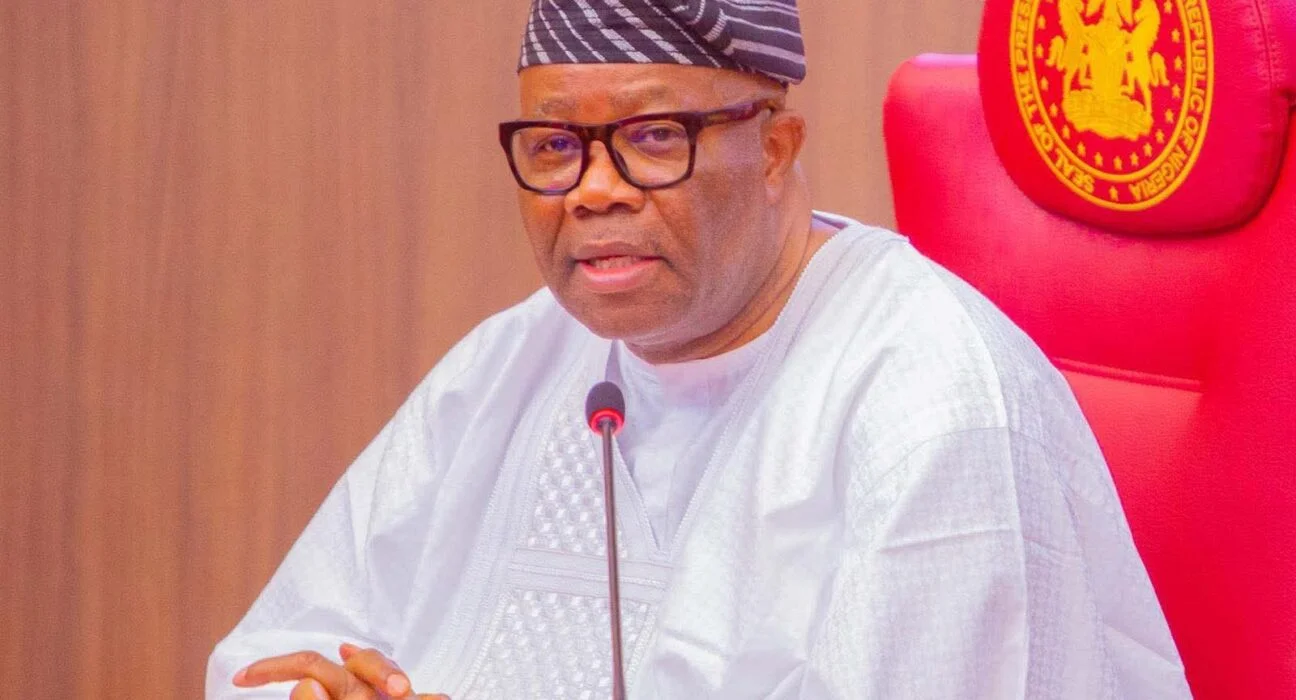
The Executive Director and Chief Executive Officer of NEPC, Mrs. Nonye Ayeni, disclosed this at a stakeholders’ engagement on the implementation of Phase Two of the National Single Window Initiative in Abuja.
Ayeni said the council had concluded arrangements with the National Single Window Project Secretariat to connect its existing digital platform through an Application Programming Interface (API), allowing exporters to access its services through the centralised trade portal.
She explained that the NEPC already operated an automated system developed by PwC, but its integration with the National Single Window would eliminate the need for exporters to move documents and papers between different government institutions.
“We already have a robust system that was developed by PwC and which we are using, and we just need to connect. And I believe in the next one or two weeks we should connect, and that would honestly bring a lot of problems and challenges that we’re carrying documents and papers across to an end,” she said.
The NEPC chief executive said the integration would simplify the export certification and registration process, which is critical to ensuring that Nigerian businesses can move their products to international markets without unnecessary administrative hurdles.
She warned that Nigeria’s ambition to grow non-oil exports could be undermined by fragmented regulatory processes, multiple government agencies, excessive documentation and avoidable delays.
Ayeni illustrated the challenges with the experience of an exporter shipping perishable agricultural commodities such as sesame and hibiscus, who may be required to visit several government offices, submit identical documents repeatedly and obtain multiple approvals before shipment.
According to her, such delays have resulted in frustrated international buyers, cancelled contracts and deterioration of perishable products before they reach their destinations.
“By the time the approval arrives, the buyer is already tired, frustrated, and this has led to contract cancellations. And this has also led, if they’re carrying some products that are perishable, to changes in their condition,” she said.
The NEPC boss said the National Single Window would provide a centralised digital platform for submitting regulatory documents, applications and permits, enabling relevant agencies to process approvals and exchange information without requiring exporters to navigate multiple independent systems.
She said the intervention was particularly important as Nigeria recorded $6.1bn in non-oil exports in 2025, representing an 11.5 per cent increase over the previous year.
Export volume also rose to 8.02 million metric tonnes, an increase of about 10 per cent, while Nigerian products reached 120 countries, including 36 African countries.
Ayeni attributed the performance to the growing capacity of Nigerian exporters, diversification of the country’s export basket, increased value addition and government efforts to expand the non-oil export base.
She, however, insisted that government agencies should recognise exporters as the real drivers of the country’s export growth.
“The Nigerian Export Promotion Council and the various agencies, the stakeholders, we are not exporters, we are not farmers, we are not aggregators, we are just trade facilitators. The people that did this are the exporters,” she added.
Also speaking, the Director and Head of the National Single Window Project Secretariat, Mr. Tola Fakolade, said the first batch of the second phase of the initiative would commence on December 14, 2026, covering export permits and regulatory processes handled by relevant government agencies.
He explained that the second batch, which would incorporate Central Bank of Nigeria-related processes, including the Nigerian Export Proceeds documentation, was scheduled for the first quarter of 2027.
Providing an update on the first phase which commenced on March 27, 2026, he disclosed that the platform had processed 169,211 import licences and permits, registered more than 12,000 importers and agents, and facilitated over N17bn in payments to government agencies.
He said the achievements provided a strong foundation for extending the platform to export operations.
The Comptroller-General of Customs, Bashir Adeniyi, said the export phase of the National Single Window would improve compliance and make trade procedures more predictable by allowing exporters to submit documents once for use by all relevant government agencies.
Represented by the Comptroller of Customs, Aondona Fanyam, he noted that the platform would eliminate the need for exporters to visit agencies individually to process documents required for their consignments.
“Every agency that needs the document gets it, makes use of it and then returns the final product to the same point for the consumption of the trading community.”
Fanyam added that the first phase which covers imports, was already operating at 99.9 per cent, adding that the digitisation of previously manual documentation had improved the speed of processing and clearance.
He said the Customs Service was working with other agencies to ensure exporters understood how to use the platform, noting that inadequate knowledge of the new system remained one of the challenges to its adoption.
According to him, the sensitisation campaign had covered Lagos, Port Harcourt, Kano and Abuja, as well as export hubs in Jos, Ondo and other parts of the country, to reach small-scale and local exporters.
Earlier, the executive chairman, Nigeria Revenue Service (NRS), Zacch Adedeji, described the National Single Window as a comprehensive reform of Nigeria’s trading system rather than merely an information technology project.
Represented by the Director of Transformation and Strategic Management at the NRS, Alfred Okoh, said the initiative represented a shift from revenue collection at the borders to trade facilitation, with the potential to improve compliance, expand non-oil revenue and strengthen the country’s competitiveness.
“The National Single Window is not just an IT project; it’s a comprehensive reform on how Nigeria trades.
“For the NRS, which we represent, it represents a paradigm shift from revenue collection at the borders to trade facilitation for growth, from fragmented compliance to integrated data-driven efficiency,” he said.
Okoh reaffirmed the NRS’s commitment to providing the technical and institutional support required for the initiative, adding that the collective target for 2027 was ambitious but achievable through sustained collaboration among stakeholders.
Also speaking, Director of Trade Information at NEPC, Ndubueze Okeke, said the engagement was designed particularly to prepare small and medium-scale enterprises for the transition from paper-based export procedures to digital processing.
Okeke said the multiplicity of agencies involved in export documentation had made it difficult for businesses to meet the demands of international trade, stressing the need to align Nigeria’s procedures with global best practices.
He said the transition to a single digital platform was consistent with international trade facilitation standards, which encourage countries to replace paper-based processes with technology-driven systems.
Okeke, however, explained that the export rollout would be implemented in phases, with the integration of additional Central Bank-related processes, including the Export Expansion Grant (EEG) component mentioned at the engagement, expected in the second phase scheduled for around March 2027.
He urged exporters, particularly SMEs, to familiarise themselves with the new system ahead of its implementation.
The National Single Window, inaugurated by President Bola Tinubu on April 16, 2024, is designed to integrate government agencies involved in international trade into a unified digital platform, allowing traders to submit regulatory documents once and receive coordinated approvals through a single interface.