







The Nigeria Labour Congress (NLC) has urged Nigerian workers and citizens to use their votes in the 2027 general elections to demand accountability from political leaders, insisting that the future of workers’ welfare must be determined both at the bargaining table and at the ballot box.
The Congress said the approaching elections presented an opportunity for Nigerians to scrutinise political parties’ promises on wages, employment, social protection and the cost of living, warning that economic policies that impoverish workers must attract serious public scrutiny.
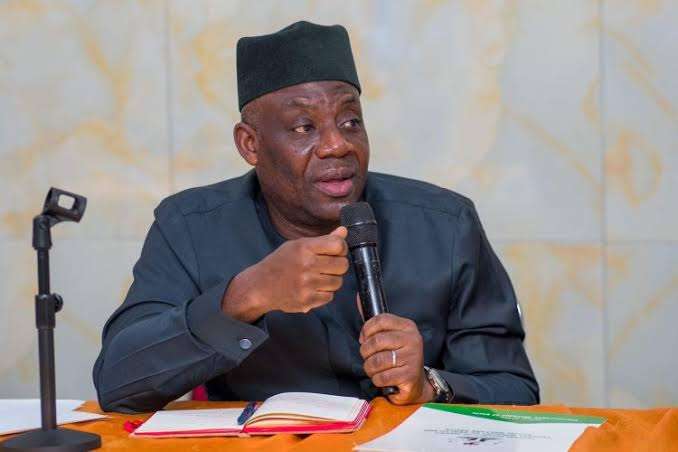
President of the NLC, Comrade Joe Ajaero who made the call at the 3rd annual Labour Conference of the Labour Correspondents’ Association of Nigeria (LACAN) in Abuja, challenged labour correspondents to compel politicians to explain how their programmes would improve workers’ living conditions, particularly as organised labour prepares for future negotiations on the national minimum wage.
Represented by the Assistant General Secretary of the NLC, Comrade Chris Onyeka, he maintained that the future of work was not merely about technological changes but also about who controlled economic resources, who benefited from production and whether workers would retain their rights and protections.
He said: “The NLC insists that the future of work must be defined by the working class itself; a future anchored in social protection, fair recruitment, and the right to organise, not one dictated by the profit-maximising logic of capital.”
Congress noted that the expansion of informal employment, casualisation and the platform economy has increased the vulnerability of workers, many of whom face uncertain earnings and limited access to social protection.
The NLC warned that economic reforms that suppress wages in the name of stabilisation would worsen workers’ hardship rather than deliver meaningful economic recovery.
“Minimum wage is not a charitable gesture; it is the price of labour power, and any economic reform that suppresses wages in the name of ‘stabilisation’ is a reform against the worker, not for the economy.”
The labour centre insisted that the struggle for a living wage must extend beyond negotiations with employers and government to the political choices Nigerians make during elections.
“As we approach the new national minimum wage negotiation and the 2027 general elections, the NLC and LACAN must jointly interrogate the concept of the future of work: what does it mean for a Nigerian worker if the future holds no pension, no job security, and no collective voice?
“The answer is clear; it means the future of work is a political question, and it must be answered at the ballot box and the bargaining table.”
The Congress therefore urged journalists to go beyond reporting campaign promises and interrogate the practical implications of proposed economic policies for workers and low-income households.
It called on LACAN to ensure that workers’ concerns remained central to public debate, adding that the media had a responsibility to expose policies and practices that undermine the interests of ordinary Nigerians.
The Congress further called on LACAN to strengthen its engagement within the Nigeria Union of Journalists, arguing that the protection of journalists’ rights and press freedom was closely linked to the broader struggle for workers’ rights.
Reaffirming its support for the association, the NLC urged labour correspondents to adopt more creative, people-centred reporting that gives greater attention to casualised workers, the unemployed and struggling households.
Congress maintained that unless workers actively shaped the political and economic decisions affecting their lives, their interests risked being sidelined in the pursuit of policies driven primarily by profit.