








By: Deborah Adekaa
The National Agency for the Prohibition of Trafficking in Persons (NAPTIP) has urged journalists to take a leading role in the fight against Sexual and Gender-Based Violence (SGBV) by using their platforms to promote prevention, justice and support for survivors.
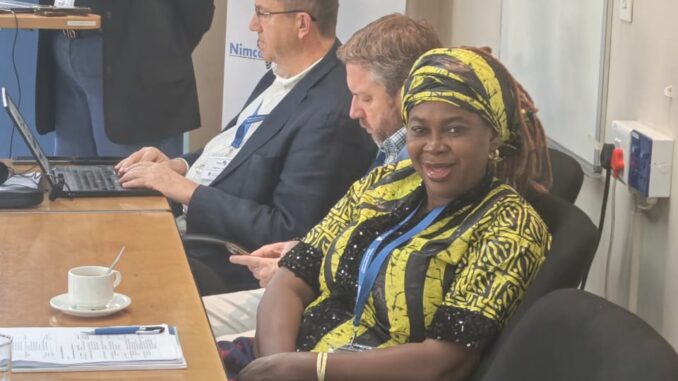
The Director-General of NAPTIP, Binta Adamu Bello, gave the charge in a welcome address delivered on her behalf by the agency’s Head of Press and Public Relations Unit, Vincent Adekoye, at a Sexual and Gender-Based Violence Media Corps Workshop organised by NAPTIP and implemented by International Institutes For Democracy And Electoral Assistance (International IDEA) with funding from the European Union.
Bello described the initiative as a landmark intervention, expressing appreciation to the European Union for its support towards efforts to end SGBV in Nigeria.
She said the rising incidence of SGBV remained a major concern, noting that NAPTIP had continued to strengthen advocacy, networking and the enforcement of relevant laws to address this menace.
According to her, the Media Corps was established to build a network of journalists committed to accurate and sustained reporting of SGBV while raising public awareness on prevention and response.
She urged participants to take ownership of the campaign, stressing that the media had a crucial responsibility to shape public discourse, expose harmful practices and drive positive social change.
Bello disclosed that NAPTIP had secured more than 40 convictions in SGBV-related cases since the enactment of the Violence Against Persons (Prohibition) Act, including three life imprisonment sentences for rape.
She assured Nigerians that the agency would continue to pursue perpetrators and ensure that victims and survivors received the necessary support.
Also speaking, the Civil Society and Community Mobilisation Specialist of the ESGBV Programme at International IDEA, Wynyfred Achu-Egbuson, said the workshop was designed to strengthen community-level information-sharing mechanisms for SGBV prevention and response.
She explained that the programme would also focus on emerging threats such as technology-facilitated gender-based violence (TF-SGBV) across the Federal Capital Territory, Benue, Kaduna and Oyo states.
Achu-Egbuson described journalism as a critical component of the campaign and urged participants to approach SGBV reporting with professionalism, ethics and a strong commitment to protecting survivors.
She assured the journalists of continued training and support to improve their capacity to report SGBV responsibly and effectively.
In his goodwill message, the Director-General of Radio Benue, Dr. Terseer Mnzughulga, described the fight against SGBV as a noble cause that required a collective and sustained approach.
Mnzughulga called for greater grassroots engagement, stressing the need to involve religious, traditional and community leaders in efforts to prevent SGBV.
He also challenged journalists to give greater attention to the issue, saying the media had a significant role in educating the public, exposing harmful practices and promoting prevention.
“SGBV is one of the issues journalists must devote their time to,” he said, stressing the importance of sustained and responsible reporting.
The organisers said the ESGBV Programme was aimed at strengthening prevention and response to SGBV through stronger legal and policy frameworks, improved access to survivor-centred services and the promotion of positive social norms.
They added that the workshop sought to move SGBV reporting away from sensationalism and fragmented coverage towards professional, ethical, survivor-centred, evidence-based and action-oriented journalism.
According to them, improved reporting would help promote prevention, provide the public with trusted information, strengthen referral pathways for survivors and contribute to lasting social change.