



The Unfinished Business of Nigerian Federalism, the Price of Contested Belonging, and the Architecture of Minorities in the Post-Colonial State
By Stephanie Shaakaa
Nigeria’s political history is often told through the rivalry of its largest ethnic groups, the ambitions of its presidents and the struggle for control of the federal government. Yet another story runs through the country’s history, one that cannot be understood simply by following the transfer of power from one administration to another. It is the story of communities that have repeatedly had to fight for recognition, representation and protection within a federation they belong to as much as anyone else. The Middle Belt occupies a central place in that story, and its unfinished struggle reveals uncomfortable truths about the Nigerian state.
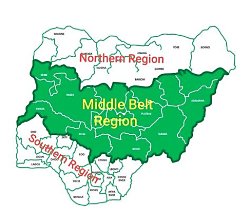
The Middle Belt is not a single ethnic group, nor is it interchangeable with today’s North Central geopolitical zone. It encompasses diverse peoples, including the Tiv, Idoma, Igala, Jukun, Berom, Angas, Eggon, Tarok, Gbagyi, Nupe, Kaje and Sayawa, among others. Their histories, languages and political interests are not identical. What has brought many of these communities into a shared political conversation is their experience of negotiating identity and influence within larger political structures in which they have feared domination or inadequate representation.
The historical Middle Belt also extends beyond the boundaries of the present North Central zone, reaching into parts of Southern Kaduna and areas of Taraba and Adamawa. It is best understood not as a uniform cultural bloc, but as a political consciousness shaped by the experiences of different communities. Its history is, in large part, the history of people asking whether belonging to a country guarantees them a meaningful voice in how that country is governed.
Colonial rule gave this question particular urgency. The British system of indirect rule and the consolidation of authority within the Northern Region helped establish political arrangements that would outlive colonial administration. As independence approached, minority communities had reason to consider what those arrangements would mean once the British departed. If regional institutions remained under the control of powerful majorities, what practical protection would minorities have when their interests conflicted with those of the people governing them?
The establishment of the Willink Commission in 1957 brought these anxieties into the constitutional debate. The commission investigated minority fears across Nigeria, including concerns about discrimination, political exclusion and inadequate safeguards. The United Middle Belt Congress (UMBC), allied with the Action Group, pressed for a separate Middle Belt State. The commission acknowledged minority grievances but declined to recommend the proposed state, citing, among other considerations, the difficulties of defining a viable unit and the uneven strength of support across the extensive area claimed. It instead favoured safeguards within the existing political framework.
That outcome was more complicated than a simple rejection of minority rights. The commission recognised genuine anxieties, yet its decision left advocates of a separate state without the institutional arrangement they believed would best protect their interests. Constitutional guarantees could establish rights in principle; they could not automatically give minority communities the influence needed to defend those rights in practice. The unresolved issue was not merely whether minorities would be protected, but how much power they would possess in shaping the institutions responsible for their protection.
Joseph Sarwuan Tarka became one of the most important political figures in this struggle. Through the UMBC, he helped turn minority concerns into an organised political demand. His significance lies not simply in his advocacy of a separate Middle Belt State, but in his insistence that independence would be incomplete if communities remained politically vulnerable within the new order.
The UMBC’s political alliances reflected the difficult calculations confronting minority movements. Tarka and his colleagues had to pursue their objectives within a political system dominated by larger parties and powerful regional interests. Their experience exposed a persistent dilemma: minorities might need alliances to gain influence, but those alliances could also require compromises over the very objectives that had brought them into politics.
The Middle Belt movement was therefore more than a demand for new boundaries. It raised a question that Nigerian federalism has never entirely resolved: how can a country accommodate its diversity without allowing numerical strength to become permanent political dominance? Tarka’s struggle gave this question an organised political expression, even though the movement did not secure everything its advocates sought.
The creation of 12 states in 1967 transformed the political landscape. Benue-Plateau State became one of the new administrative units, and subsequent state creation in 1976, 1987, 1991 and 1996 produced the present federation of 36 states.
The benefits were significant. New states brought government closer to many communities, created additional centres of political participation and opened opportunities that older regional arrangements had often restricted. For communities that had long sought greater recognition, state creation represented a meaningful change in their relationship with government.
But a new boundary could not settle every question that had produced the Middle Belt movement. State creation did not automatically guarantee equitable representation, eliminate political competition or secure every community against violence. Nor did separate state structures necessarily preserve the collective influence that a broader regional movement could exercise. Communities gained new political platforms, but their interests also became dispersed across different governments and competing political calculations.
This is the distinction that matters: administrative reorganisation can change where power is exercised without ensuring that power is exercised fairly. A community can have a state capital, elected representatives and government institutions nearby while still feeling abandoned when its people need protection. The creation of states was an important development in Nigeria’s federal history, but it was never a substitute for accountable government.
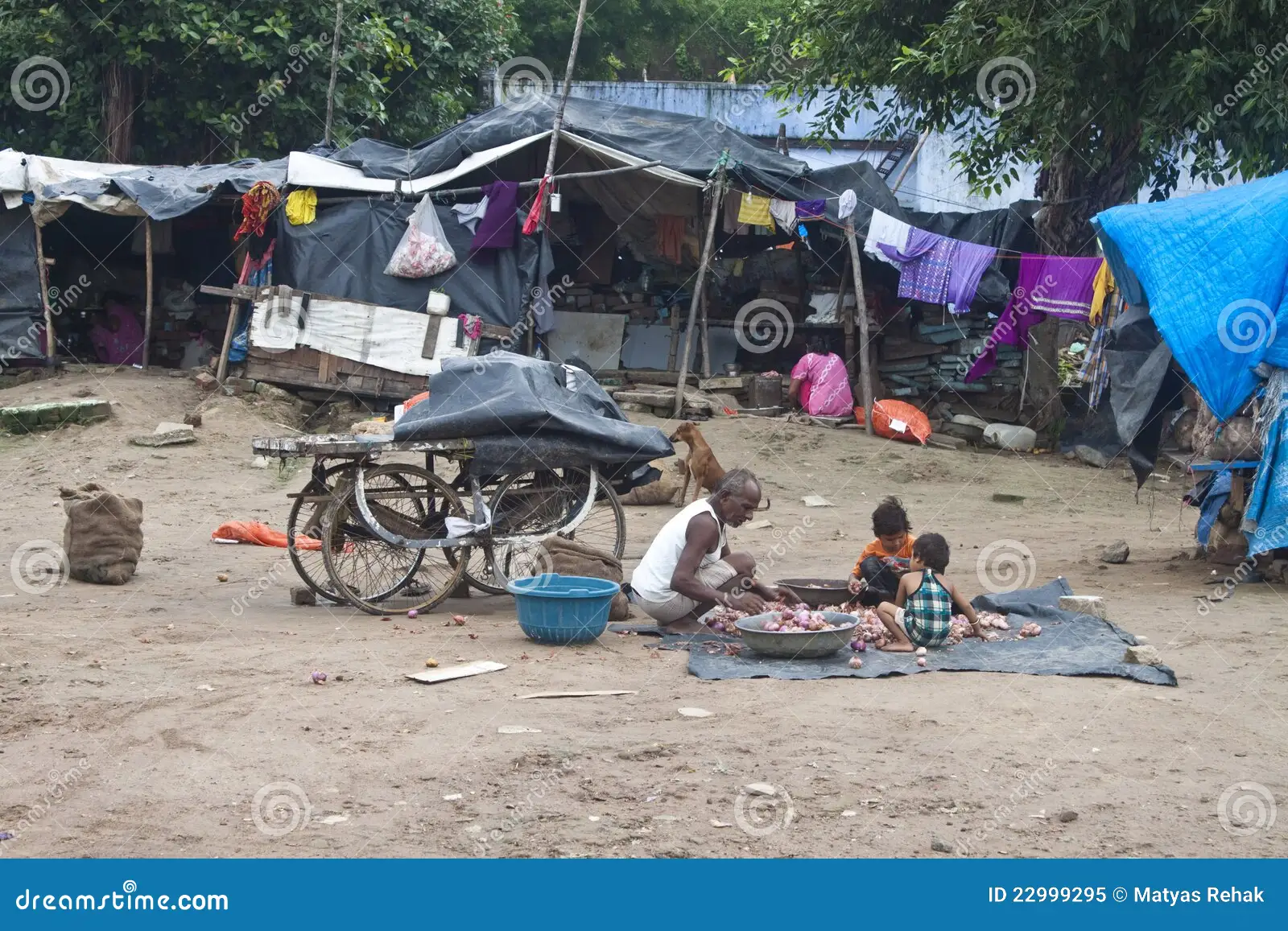
Today, that distinction is painfully visible in the insecurity affecting communities across Benue, Plateau, Southern Kaduna, Taraba, Nasarawa and other parts of the country. Attacks, displacement, destroyed homes and disrupted farming have inflicted losses that extend far beyond the immediate violence. For families dependent on agriculture, losing access to ancestral land can mean losing their income, inheritance and the foundation of their community life.
These conflicts do not all have the same causes. Land disputes, competition over resources, environmental pressures, criminal violence, communal tensions and failures of governance can intersect differently from one place to another. Serious analysis must recognise those differences. But complexity must not become an excuse for inaction, and explaining the conditions in which violence occurs must never be confused with justifying the violence itself.
Competition over land cannot justify the killing of civilians or the forced displacement of communities. The state has a responsibility to protect lives, investigate attacks impartially and bring those responsible to justice through due process. Displaced people need more than assurances that they may return home. They need credible security, the restoration of livelihoods and confidence that returning will not expose them to another attack.
Section 14(2)(b) of Nigeria’s Constitution identifies the security and welfare of the people as the primary purpose of government. For communities repeatedly exposed to violence, the value of that provision is measured not by statements issued after bloodshed, but by whether warnings are acted upon, security agencies respond effectively, crimes are investigated and families can live without the constant fear of displacement.
Meeting that responsibility requires reliable early-warning systems, better rural security and effective accountability for security agencies. Proposals for state policing deserve serious consideration, but any model must guard against political interference and abuse. Land disputes require credible adjudication rather than the imposition of control through violence. Reconstruction must help displaced families recover their livelihoods, while agricultural communities need safe access to their farms and the infrastructure required to rebuild.
These measures cannot replace one another. Reconstruction without security is fragile; security without justice leaves grievances unresolved. Above all, no reform can succeed if government treats the protection of vulnerable communities as an occasional emergency rather than a continuing responsibility.
The Middle Belt’s political future also depends on its ability to build common purpose without pretending that its peoples are identical. A shared regional identity should enable cooperation among different communities, not erase their distinct histories or interests. The challenge is to secure effective representation while recognising that the region’s political strength depends on respecting its internal diversity.
The demand that animated the Middle Belt movement was that people should have a meaningful say in the political arrangements governing their lives. Joseph Tarka and the UMBC pursued that demand in the difficult circumstances of their time. The creation of states later changed the political map, but no administrative arrangement can, by itself, settle questions of representation or guarantee the safety of those living within its boundaries. Those responsibilities fall to the institutions that govern them, and they remain unfinished wherever communities are left to face violence without effective protection.
For the people of the Middle Belt, these questions are not confined to constitutional debates or the recollections of an earlier political generation. They arise when a family cannot return to its home, when a farmer fears going back to his land, and when communities wonder whether the next warning of an attack will be taken seriously. Nigeria has spent decades rearranging its federation. The harder task is to make its institutions worthy of the people who live within it. The Middle Belt’s place in the country’s future will depend, in part, on whether Nigeria finally takes that responsibility seriously.
Stephanie Shaakaa can be reached atn shaakaastephanie@yahoo.com