


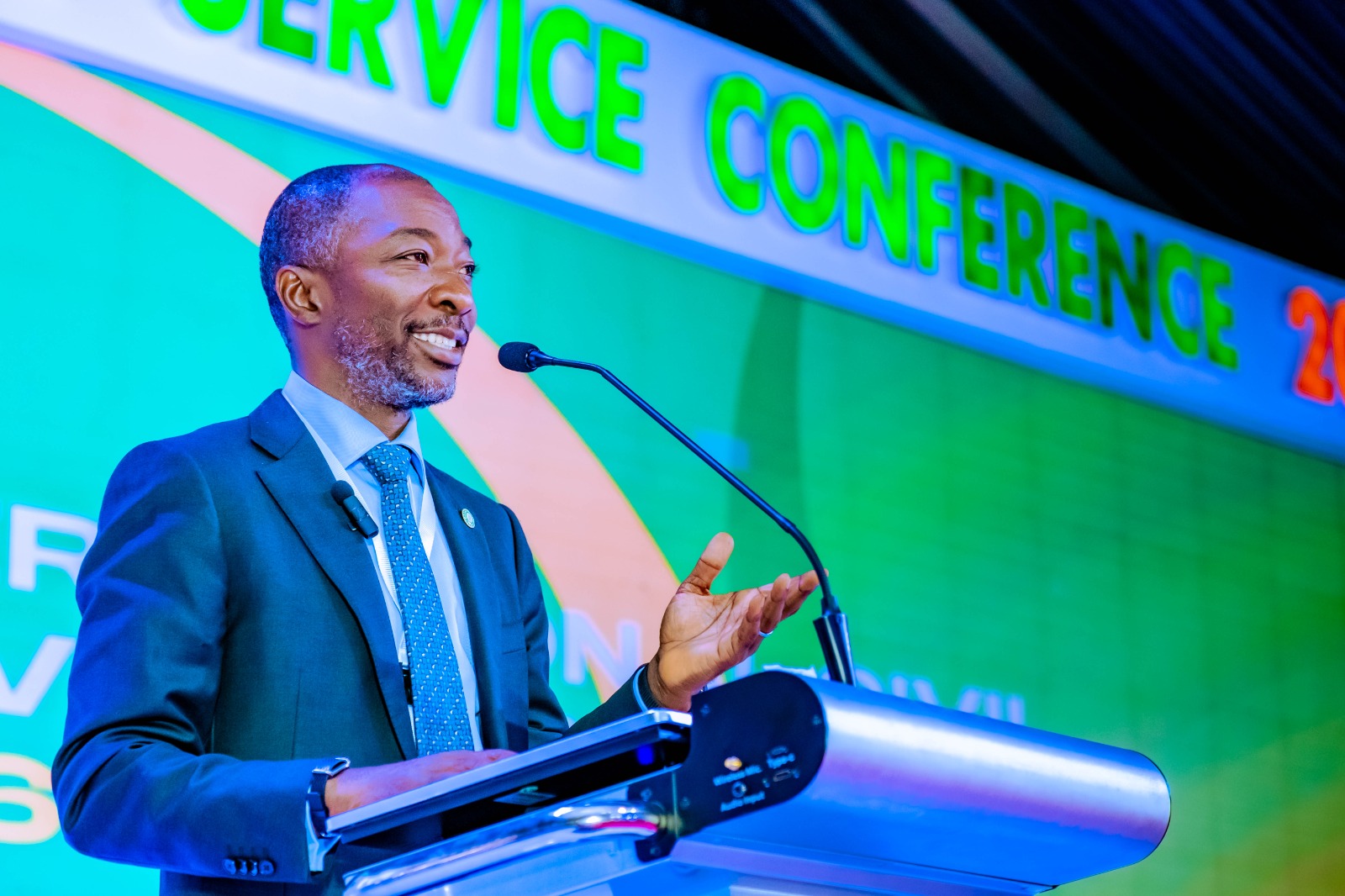






The Managing Director of the Nigeria Social Insurance Trust Fund (NSITF), Oluwaseun Faleye, has called for stronger inter-agency collaboration across the public service to enhance workers’ welfare, productivity and social security.
He made the call in his goodwill message at the Technical Retreat on Presidential Priority, Ministerial Deliverables and Performance Management System (PMS).
He commended the Federal Ministry of Labour and Employment for convening the meeting, describing it as a vital platform for dialogue, coordination and exchange of ideas among agencies with shared institutional responsibilities.
“I commend the Ministry for providing this platform for dialogue, coordination and the exchange of ideas, such engagements are important because the effectiveness of public service delivery depends not only on the performance of individual institutions, but also on how well we work together,” he said.
Faleye, who was represented at the retreat by his Technical Assistant, Dayo Aloa, noted that the collective responsibility of the Ministry of Labour and NSITF remains the same, “to deliver public value, strengthen institutions and improve the welfare and security of Nigerians.”
Speaking on the Fund’s mandate, Faleye explained that the NSITF administers the Employees’ Compensation Scheme (ECS) established under the Employees’ Compensation Act 2010, which provides compensation and support for employees and their dependants in cases of work-related injuries, occupational diseases, disabilities and death.
“At the heart of this mandate is a simple but important principle: no worker or family should be left without support when a qualifying workplace incident disrupts their livelihood and future,” he said.
He stressed that workers’ welfare is inseparable from national productivity, industrial harmony and sustainable economic development, adding that a worker who feels protected contributes more meaningfully to the workplace.
Faleye further stated that the Fund’s role goes beyond claims processing and payment of compensation, but includes sustained engagement with employers and workers, improved awareness of the Scheme, stronger compliance with statutory obligations and commitment to workplace health and safety.
“We must remain focused on making the Scheme accessible, responsive, transparent and effective for those entitled to its protection,” he stressed.
Emphasizing that no single agency can address all dimensions of workers’ welfare, employment protection, workplace safety and social security alone, the NSITF boss called for reduced duplication, knowledge sharing and more coherent responses to challenges facing Nigerian workers and employers.
“I therefore see this meeting as an opportunity to deepen our working relationships, identify practical areas of collaboration and strengthen the alignment between our respective programmes and priorities,” he noted.
Looking ahead to 2027, the Managing Director reaffirmed NSITF’s commitment to strengthening implementation of the ECS, improving service delivery, promoting employer compliance and advancing workplace safety.
“As we deliberate on our institutional responsibilities and targets, we should remain mindful that the ultimate measure of our success is not merely the activities we undertake, but the tangible improvements our work delivers to the people we serve,” he said.
He thanked the Permanent Secretary of the Federal Ministry of Labour and Employment and participating agencies for their contributions to public service delivery and wished the meeting fruitful deliberations that will lead to a more productive and secure Nigeria