



The Federal Government has pledged to honour its agreements with unions in tertiary institutions, warning that failure to implement past commitments had eroded trust, triggered recurring industrial disputes and disrupted academic calendars across the country.
This came as presidents of key tertiary education unions commended President Bola Tinubu’s administration for concluding long-standing renegotiations with unions in the sector, but called on the Federal Government to ensure full implementation of all components of the agreements.
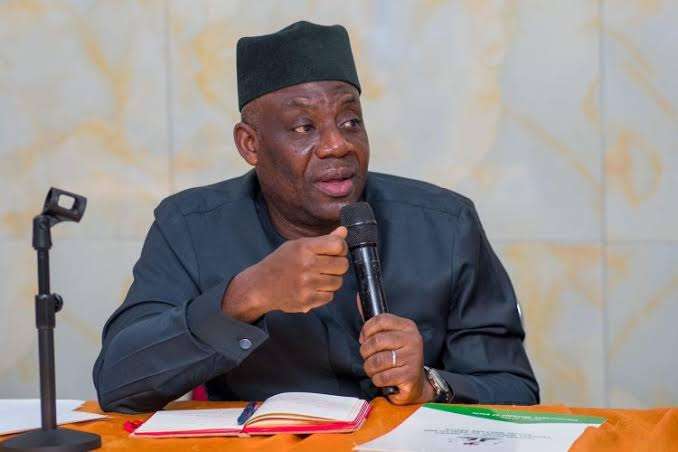
Minister of Education, Dr Tunji Alausa gave the assurance at the unveiling of the 2026 agreements between the Federal Government and staff unions of tertiary institutions, declaring that the government would be held accountable for translating the agreements into tangible benefits for workers and students.
The signed agreements were presented to representatives of the Academic Staff Union of Polytechnics (ASUP), Colleges of Education Academic Staff Union (COEASU), the Senior Staff Association of Nigerian Universities (SSANU), the Non-Academic Staff Union of Educational and Associated Institutions (NASU), the National Association of Academic Technologists (NAAT), the Senior Staff Association of Nigeria Polytechnics (SSANIP), the Non-Teaching Staff Union of Polytechnics (NOTSUP) and the Senior Staff Union in Colleges of Education, Nigeria (SSUCOEN).
Alausa said the government had also decided to expand the existing Implementation and Monitoring Committee (IMC) for the agreement with the Academic Staff Union of Universities (ASUU) into a single committee to monitor the implementation of agreements with academic and non-academic staff unions across tertiary institutions.
According to him, the expanded committee would have broader representation of the unions and relevant stakeholders to monitor agreed milestones, assess progress, address implementation challenges and ensure accountability through periodic reports.
He said: “This expanded Committee will provide a common platform for Government and the Unions to monitor agreed milestones, assess progress, address implementation challenges and ensure accountability through periodic reports on achievements and outstanding obligations.”
Alausa added that implementation must be timely, transparent and measured against clearly defined obligations, stressing that emerging difficulties must be identified and addressed before they undermine trust or interrupt academic activities.
The minister noted that the agreements covered the Consolidated Academic Tools Allowance (CATA) for the Academic Staff Union of Polytechnics (ASUP) and the Colleges of Education Academic Staff Union (COEASU), as well as the Consolidated Non-Teaching Tools Allowance (CONTTA) for non-teaching staff unions in universities, polytechnics and colleges of education.
According to him, the allowances take effect from January 1, 2026, in line with the agreements and applicable implementation guidelines.
He explained that the allowances were designed to support the professional and operational needs of eligible personnel, noting that staff welfare remained critical to the quality of tertiary education.
“The quality of tertiary education is inseparable from the welfare, motivation and professional wellbeing of its workforce. Staff must be supported with appropriate resources and conducive working environments to discharge their duties effectively.”
The minister recalled that agreements between the government and staff unions had, over the years, been followed by delayed, incomplete or unfulfilled commitments, resulting in renewed negotiations and recurring industrial disputes.
He said the consequences extended beyond workers to students and their families, with prolonged strikes disrupting academic calendars, increasing costs and delaying graduation.
“Most importantly, students lost precious months and years. Families faced additional costs and uncertainty, while teaching and research suffered. A four-year programme too often extended beyond four years.”
Alausa said the latest agreements represented a renewed commitment to industrial harmony and the continuity of learning, adding that the administration of President Bola Tinubu was determined to ensure that students could complete their programmes within the stipulated period.
“Let me state clearly, on behalf of the Federal Government: We will fulfil our own part of these historic agreements. We recognise that public confidence will depend on the obligations we honour after this ceremony.”
He added that the government would work with relevant agencies, governing councils, institutional managements and union leaders to ensure effective implementation, transparent promotion processes, occupational safety and opportunities for career advancement.
The minister urged government agencies to discharge their responsibilities diligently, while calling on governing councils and institutional managements to maintain accurate records, comply with implementation guidelines and cooperate with the monitoring committee.
He also urged union leaders to keep their members informed and channel emerging concerns through agreed mechanisms rather than allow disputes to escalate into industrial action.
“Industrial harmony is essential to educational excellence. It gives institutions the certainty to plan, supports uninterrupted research and allows students to concentrate on their studies,” he said.
While acknowledging the government’s efforts in concluding the negotiations, Presidents of the various unions warned that the payment of salary arrears and allowances alone would not be sufficient without the implementation of other outstanding provisions.
ASUP President, Comrade Shammah Kpanja, credited Tinubu’s approval for the establishment of the renegotiation committee chaired by former Head of the Civil Service of the Federation, Alhaji Yayale Ahmed, saying the process was the fastest in the union’s history of negotiations with the government.
He explained that ASUP commenced its renegotiation in December 2025, with the agreement signed in April 2026, describing the timeline as the shortest the union had recorded across its previous negotiations.
“I want to put it on record that our unions have been signing agreements with government since 2001. The renegotiation of this agreement is the one that took the shortest time.”
Kpanja, however, stressed that signing the agreement was only one part of the process, insisting that the government must implement all its provisions to sustain industrial peace in the polytechnic subsector.
He disclosed that implementation had commenced, with members receiving outstanding salary arrears in instalments.
“After the agreement was signed in April, after the payment of salary in July, we got arrears of January and February. After the payment of August salary, we got six-month arrears. After the payment of September salary, we got the arrears of September,” he said.
The ASUP president said other components of the agreement remained outstanding, expressing hope that the Joint Implementation and Monitoring Committee, scheduled for inauguration by the Federal Ministry of Education on Wednesday, would accelerate their implementation.
He added that the unions wanted the outstanding provisions implemented before the 2027 general elections to prevent political activities from delaying the process.
Similarly, COEASU President, Comrade Ahmed Lawan, said the colleges of education subsector had recorded substantial progress in implementing its agreement, attributing the development to the commitment of the Federal Government’s negotiating team.
Lawan praised Tinubu for the renewed hope roadmap for tertiary education introduced in 2024, particularly the policy supporting the dual mandate of colleges of education, which allows institutions to award degrees alongside the Nigeria Certificate in Education (NCE).
He described the policy as a significant departure from the approach of previous administrations, which, according to him, had been reluctant to implement the reform.
“The dual mandate that the chairman just mentioned is a new move, taking out of the box that several governments were shy to implement,” he said.
Lawan said the college’s of education subsector had achieved more than 70 per cent implementation of its agreement even before the inauguration of the monitoring committee.
He maintained that the success of the renegotiation should not be measured by financial benefits alone, warning that non-monetary provisions must not be abandoned after allowances had been paid.
He expressed confidence that the implementation committee would address the remaining provisions and consolidate the gains recorded by the unions.
Also speaking, SSANU President, Comrade Ibrahim Mohammed, said the Tinubu administration had broken a 17-year deadlock by concluding the renegotiation in less than one year.
“What this government has been able to do is that you have broken the jinx. What other governments have not been able to do in 17 years, you did it in less than one year,” Mohammed said.
He recalled that Alausa had engaged union leaders even before assuming office as education minister, at a time when the unions were considering industrial action over outstanding salary payments.
According to him, the minister’s early intervention and subsequent engagement with the unions helped build confidence in the government’s willingness to address their grievances.
Mohammed said university workers had received several payment alerts in the preceding week, describing the development as evidence of progress in the implementation process.
He however urged the Federal Ministry of Education to expedite the processing and release of circulars relating to other unions whose agreements were yet to be fully processed.
“The honourable minister, our colleagues from NAT and other unions have still not had their agreement processed. It’s still within the ministry or one office or the other. There is a lot of palpable tension,” he said.
The SSANU president called for urgent action to ensure that all affected unions benefited from the renegotiation process, warning that delays could undermine the goodwill generated by the government’s intervention.
He assured the government of the unions’ continued cooperation, saying improved welfare for university workers would contribute significantly to national development.