

By Stephanie Shaakaa
There is an old principle at the heart of every functioning democracy. Government makes the law, but government must also obey it. When that balance breaks, something deeper than a policy dispute is at stake. The credibility of the state itself begins to erode.
That is why the unfolding controversy around the appointments of Executive Directors to the Nigerian Revenue Service deserves far more attention than it is currently receiving. At first glance, it looks like just another bureaucratic disagreement over procedure. But the issue goes beyond procedure. It touches the very foundation of governance in a country that is already struggling with public trust in institutions.
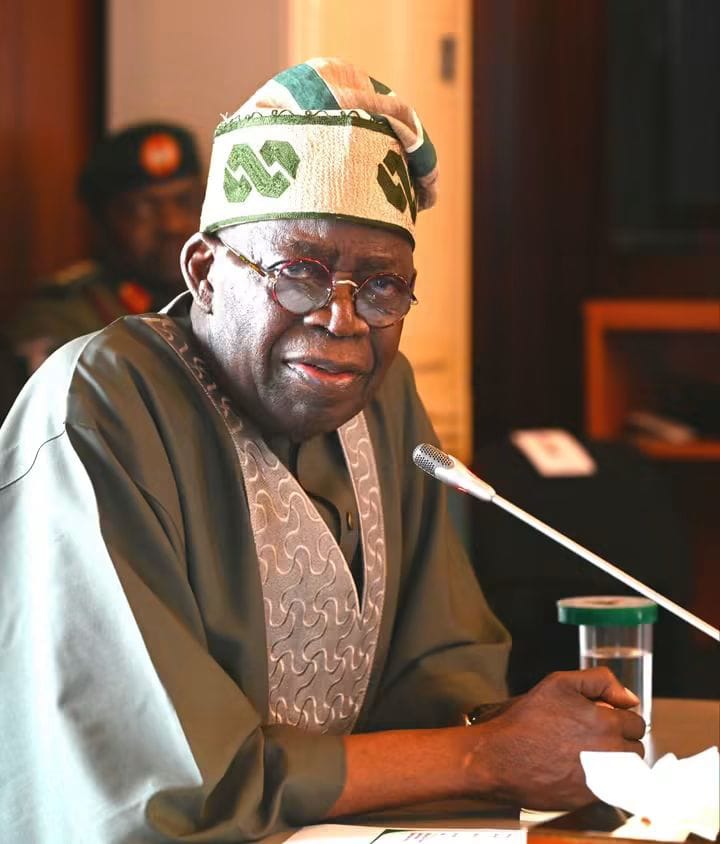
The Nigerian Revenue Service was created through the Nigerian Revenue Service Establishment Act 2025, signed into law by President Bola Ahmed Tinubu as part of a broader attempt to overhaul Nigeria’s tax administration. The reform was meant to modernize the country’s revenue architecture, expand the tax base and bring greater efficiency to a system long plagued by fragmentation and weak enforcement.
But even the most ambitious reforms depend on one simple condition. The law establishing them must be respected.
The Act provides a clear framework for the appointment of six Executive Directors, one representing each of Nigeria’s six geopolitical zones. To avoid political manipulation and ensure fairness among states within each zone, the law introduced a rotation principle based on alphabetical order. It is a simple mechanism, almost mechanical in its fairness. Each state knows when its turn will come. No lobbying, no discretion, no room for suspicion.
The provision also ensures that the Executive Chairman and the Executive Director cannot come from the same state, another safeguard designed to maintain balance within the leadership of the new agency.
On paper, it is a straightforward system.
Yet the appointments that have recently been announced appear to diverge from that sequence in several zones. Instead of following the alphabetical order stipulated by law, the positions reportedly went to states that do not correspond with the expected rotation.
For example, within the North Central zone, Benue would have been next in the alphabetical order, yet the appointment reportedly came from Niger. In the North West, Jigawa should have preceded Kano. In the North East, Adamawa should have appeared before Borno. In the South East, Abia would have come before Imo. In the South West, Ekiti would have been next ahead of Lagos.
Only the South South appointment appears to align with the structure outlined in the Act.
Some may argue that these differences are technical details. But in a country like Nigeria, details such as these matter enormously. They are precisely the kinds of rules designed to prevent the endless disputes over representation that have haunted national institutions for decades.
When a law is written with such clarity, ignoring it does not merely create confusion. It raises questions.
Civil society organisations have already begun asking those questions. Analysts warn that disregarding the legal framework of a newly established institution risks undermining the very credibility it needs to function effectively. A revenue authority, more than most government agencies, relies on public confidence.
Taxes are not voluntary contributions. They are obligations imposed by law. But compliance in modern societies is sustained not only by enforcement. It is sustained by legitimacy.
Citizens are far more likely to obey tax laws when they believe the system itself is fair and consistent. When the institution responsible for enforcing those laws appears to have been constituted in disregard of its own governing statute, the message becomes difficult to defend.
The issue also carries broader implications for governance. Nigeria already struggles with a perception that rules are applied unevenly. For many citizens, the law appears rigid when dealing with ordinary people yet strangely flexible when it concerns powerful institutions or political actors.
Every episode that reinforces this perception deepens public cynicism.
That is why this controversy should not be dismissed as a technical quarrel about appointments. It is, at its core, a question about whether the rule of law is something Nigeria merely proclaims or something it genuinely practices.
President Bola Ahmed Tinubu has repeatedly spoken about reforming Nigeria’s economy and strengthening institutions. The tax reform programme that produced the Nigerian Revenue Service was presented as a cornerstone of that vision. The success of that vision will depend not only on new policies but on the discipline with which existing laws are respected.
If the appointments indeed departed from the clear provisions of the Act, the remedy should not be complicated. Transparency would go a long way. An explanation from the appropriate authorities could clarify whether there are legal interpretations or administrative circumstances that justify the decisions. If there has been an oversight, correcting it would demonstrate a commitment to due process.
In fact, acknowledging and fixing a mistake would strengthen the credibility of the reform far more than silence.
What would be dangerous is allowing the matter to drift unresolved. Institutions are shaped not only by the laws that create them but by the precedents set in their earliest moments. When those first precedents appear to bypass the rules, the damage can linger long after the controversy fades.
Nigeria’s tax system desperately needs trust. Government needs citizens to believe that when it demands compliance, it does so from a position of moral authority.
But that authority begins with a simple principle.
Before a government asks citizens to obey the law, it must show that it obeys the law itself.
Because when the state begins to treat its own rules as optional, it quietly invites everyone else to do the same.
A government that bends the law to make appointments weakens the moral authority to enforce that same law on citizens.
If the law can be ignored when appointing tax collectors, Nigerians will wonder why it must be obeyed when collecting taxes.
You cannot build tax obedience on a foundation of legal disobedience.
Stephanie Shaakaa writes from shaakaastephanie@yahoo.com