






The Nigerian Communications Commission (NCC) has commended the Edo state government for taking measures to safeguard telecommunications Infrastructure during road constructions, noting that the Edo Model should be emulated by other states of the federation.
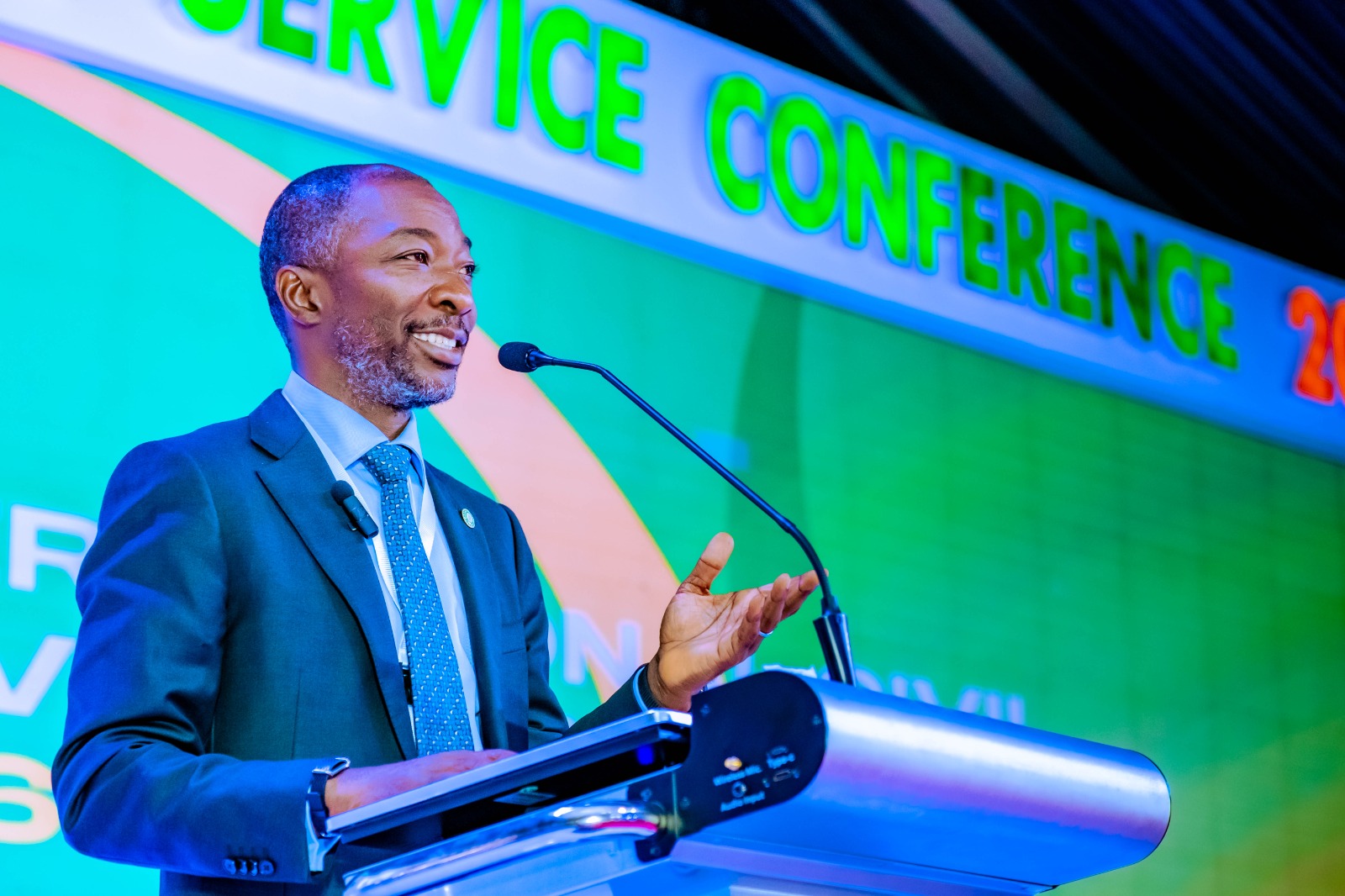
The Executive Vice Chairman of the NCC, Aminu Maida in a breakfast session with Journalists in Abuja Friday said that the Edo state government has made it mandatory for its contractors in road construction to notify the NCC and Mobile Network Operators (MNOs) before commencing road construction works.
He said such approach by the state government ensures the integrity of telecommunications Infrastructure and ensures quality of service.
“I would commend a particular state, Edo State, for how they have approached the matter. I would like to appreciate Edo State in the way they have handled that collaboration in a very simple but effective manner, whereby their contractors, prior to starting any work, they send out letters with the commission informed to all the telco service providers who own infrastructure to basically give them notice of work. And that simple action has resulted in a significant decrease in the number of incidences that occur due to construction activities. So it’s a model now that we’re encouraging other states to adopt” he said.
According to the NCC boss, while there has been significant improvement in the quality of service provided by the telecommunications operators, there is still room for improvement and the NCC is leaving no stone unturned in order to achieve this.
“We’re still not where we want to be, but are we satisfied as a regulator? I would say within the context for which we operate, I think the area of satisfaction is the fact that we’re beginning to see the right signals. So, the quality of experience, as indicated by our independent crowdsource data, this is data being supplied by users all around the country. We’re seeing improvements rather than services degrading. But at the same time, we’re also seeing a rise in consumption.
“So you’re getting better service, and you want to use more of it. We just have to be a little bit more patient. But the good news (because of all the measures we took to address sustainability concerns), is that the investments which we saw last year, of just over a billion dollars, are being sustained.
“And the numbers in terms of the work done also support this. So, last year, we saw just under 3,000 sites being upgraded and introduced for coverage and capacity. But this year they have committed to upgrading and introducing sites, which in total are about 12,000.”
According to him, they have done just under about 2,800 in total, adding that this cuts across the three major operators–Airtel, Globalcom, and MTN, involving a combination of new sites.
He explained that sites have been upgraded from slower technologies– 2G, 3G to 4G and 5G.
“We’re not where we should be, but we’re moving in the right direction. There are still some issues which we are seeing around the actual quality of experience in the areas of latency and jitter. In terms of average speeds, things are getting better,” Maina explained.
Dr Maida said the Commission insisted that the MNOS compensate subscribers for poor services because those who suffer for the failure of the Operators deserve some level of cushions.
“NCC took this approach because we felt that the approach whereby we simply find the operators and government collect the money, perhaps we should find a way whereby those who actually suffer the poor service also get back some value.
while welcoming journalists to the session, the Director Public Affairs of the NCC, Nnena Ukoha, said the exercise was part of the policy of the NCC boss to be accountable to the public by offering explanations for the commission’s actions and decisions.