






By Ken Harries Esq
A nation’s influence in the councils of the world is earned by more than the loudness of its declarations. It rests upon the strength of its alliances, the constancy of its friendships and the force of its counsel. The true test of diplomacy is whether goodwill can be turned into firm commitments, and firm commitments into lasting gains for the nation.
To secure those gains, a nation must cultivate relationships wherever decisions are shaped and consensus is forged. Parliamentary diplomacy extends that reach, bringing the voices of elected representatives into the work of building alliances and advancing national interests. Alongside executive diplomacy, it strengthens a nation’s capacity to engage, negotiate and help shape the international agenda.
Nigeria’s role in garnering support for Mr Milton Dick, Speaker of Australia’s House of Representatives, offers a timely opportunity to examine the place of Nigerian parliamentary diplomacy in global affairs. At the 153rd Inter-Parliamentary Union (IPU) Assembly in Arusha, Tanzania, on Friday, 9 October 2026, Mr Dick emerged as the organisation’s 32nd President, securing 56 per cent of the votes in a three-candidate contest. He succeeds Dr Tulia Ackson of Tanzania, whose three-year tenure concluded with the Assembly.
The significance of the election for Nigeria extends beyond the person of the successful candidate. It lies in Nigeria’s diplomatic engagement in support of his candidacy, its efforts to rally parliamentary partners around a shared choice and the opportunity to translate those relationships into enduring national and continental influence.
The Akpabio factor: From institutional presence to diplomatic engagement
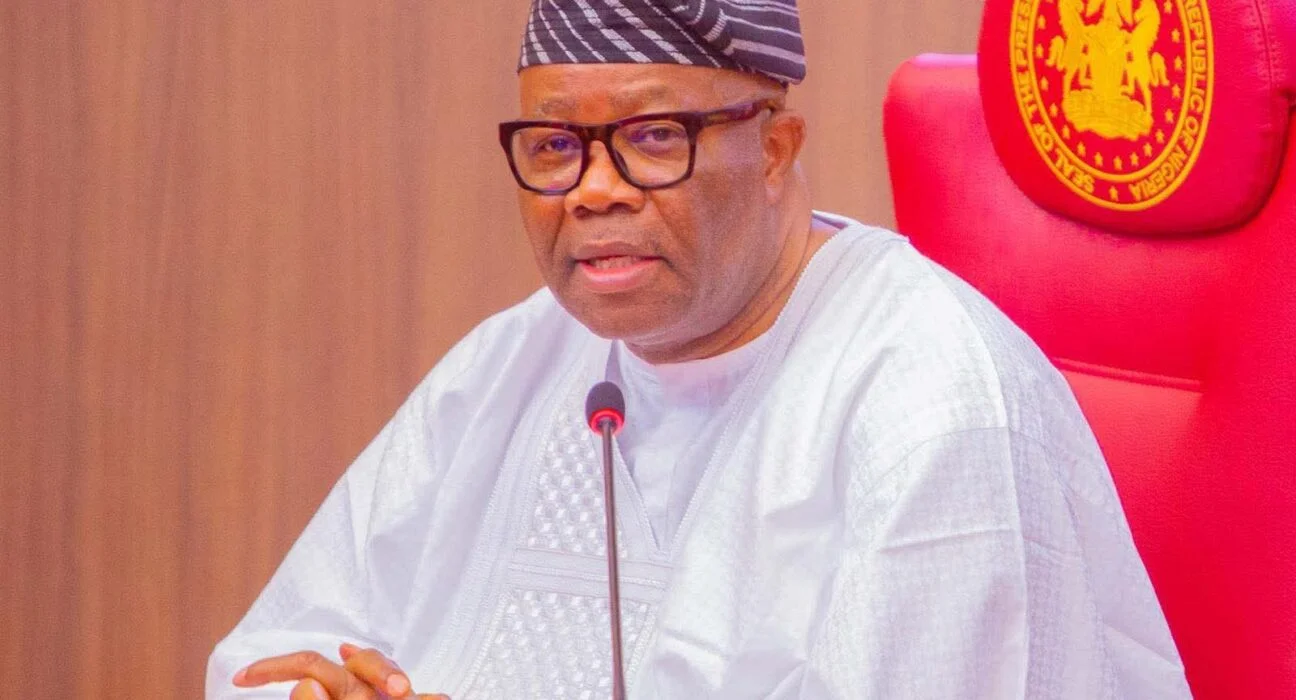
The Nigerian dimension of this development centres on Senator Godswill Obot Akpabio, GCON, President of the Nigerian Senate, Chairman of the National Assembly and a member of the IPU Executive Committee. His position within the organisation gives Nigeria an institutional platform from which to contribute to its direction and cultivate relationships across its membership.
Before the election, Mr Dick visited Abuja to solicit the support of the Nigerian Parliament. Akpabio assured him of Nigeria’s backing and pledged to advocate for his candidacy within the African Group of the IPU. The engagement also addressed stronger Nigeria–Australia cooperation in mining, agriculture, education, renewable energy, technology, security and capacity building. Support for an international candidacy thus became an occasion to explore a broader bilateral relationship.
That engagement illustrates an important principle of parliamentary diplomacy: influence is often exercised before a vote is cast. It begins with consultations, the cultivation of confidence, the identification of shared interests and the ability to bring stakeholders into a common conversation. In multilateral institutions, where countries bring competing priorities and perspectives to the table, the capacity to facilitate consensus can be consequential.
Nigeria’s support and its commitment to mobilising African backing belong within that diplomatic context. The election was conducted by secret ballot; its result does not disclose how individual delegations voted or permit a precise calculation of Nigeria’s contribution. Nigeria’s initiative can therefore be recognised without attributing the outcome to any single country.
The importance of the initiative lies in Nigeria’s willingness to move from institutional presence to purposeful engagement: taking a position, reaching out to partners and helping build support around it.
Why the IPU matters to Nigeria
Founded in 1889, the Inter-Parliamentary Union is the global organisation of national parliaments. It promotes parliamentary cooperation, peace, democracy and sustainable development, while providing a forum for lawmakers to deliberate on challenges that transcend national boundaries.
Its relevance to Nigeria is practical. Peace and security, migration, climate change, economic inequality, technological disruption and the protection of democratic institutions cannot be addressed exclusively through domestic legislation. They require international cooperation, to which parliaments contribute through legislation, oversight, representation and the exchange of policy experience.
Parliamentary diplomacy also creates channels of communication that can remain useful when political differences complicate relations between governments. Legislators can sustain dialogue, explain national positions and examine how other countries are responding to shared challenges. Its value therefore extends well beyond supporting candidates for international office.
The deliberations in Arusha reflected this broader purpose. The Assembly’s theme—enhancing good governance and empowering communities through inclusivity, trust and opportunities for all—connected international parliamentary dialogue to the everyday responsibilities of legislatures: ensuring that public institutions respond to the people they represent.
For Nigeria, participation creates opportunities to advance national and African priorities, exchange legislative experience and build partnerships that can inform governance at home. These opportunities become valuable when international engagement is connected to the work of the National Assembly and the needs of its constituents.
The African Group: The strategic arithmetic of collective influence
One of the most important dimensions of the Nigerian engagement is the effort to mobilise support through the African Group of the IPU. The Group comprises 52 member parliaments, providing a substantial platform for continental cooperation. Its size, however, should not be mistaken for an automatic voting bloc or agreement on every issue.
Africa’s international influence is strengthened when its countries identify common interests and coordinate their positions. Fragmentation can make it difficult to sustain a collective voice on questions affecting the continent, even where the underlying concerns are widely shared.
Nigeria’s demographic scale, regional relationships and experience in multilateral engagement give it a basis for contributing to such coordination. But leadership within a continental grouping must be earned through consultation, credibility, respect for other members and a willingness to pursue shared objectives beyond individual contests.
This provides the proper context for Akpabio’s undertaking to engage African parliamentary colleagues on Dick’s candidacy. It was an exercise in coalition building among partners whose independent judgment had to be respected. The wider opportunity is to carry that spirit of consultation into substantive questions of African development, peace and security, trade and democratic governance.
African solidarity has strategic value when it is organised around clearly defined interests. It enables member countries to strengthen their participation in international deliberations while retaining their sovereignty and freedom of judgment.
Nigeria’s institutional platform: Presence, access and responsibility
Nigeria’s engagement at the IPU is not occurring in an institutional vacuum. The National Assembly’s wider international parliamentary relationships provide channels for legislative cooperation, capacity building and regional dialogue. Akpabio’s membership of the IPU Executive Committee adds a further dimension to that engagement, placing Nigeria within an important part of the organisation’s governance structure.
Such positions offer access to discussions, relationships and institutional processes. But access is only the starting point. The real test is whether it produces benefits that can be identified and sustained.
Those benefits may include stronger legislative cooperation, improved oversight practices, exchanges on economic reform and digital governance, and greater visibility for Nigerian and African policy priorities. Where discussions concern education, technology or investment, parliamentary relationships can help open doors and encourage follow-through by the relevant public institutions and private-sector partners.
The distinction between representation and results is crucial. A parliament may attend high-level assemblies and occupy positions within international bodies, yet fail to realise their full value if engagement is episodic, poorly coordinated or disconnected from domestic priorities.
The Abuja discussions offer a concrete starting point. The sectors identified for Nigeria–Australia cooperation provide an agenda against which subsequent engagement can be assessed. The question is whether the goodwill generated leads to sustained exchanges, institutional partnerships and practical opportunities.
Beyond the election: Consolidating Nigeria’s diplomatic gains
The election of a new IPU President provides a useful moment for the National Assembly under Akpabio’s leadership to consolidate its parliamentary diplomacy.
First, participation in international institutions should be linked to defined national objectives. Policy briefs, negotiation priorities and mechanisms for reporting outcomes would give delegations a clearer mandate and enable the legislature and the public to assess what their engagements achieve.
Second, consultations with African parliamentary partners should continue beyond electoral contests. Common positions do not require uniformity on every question. They require the discipline to identify shared interests, respect differences and coordinate where cooperation can deliver practical value.
Third, international parliamentary relationships should feed into domestic legislative work. Exchanges on budget scrutiny, public accountability, digital governance, climate legislation and institutional transparency become useful when the lessons are examined by relevant committees and adapted to Nigerian circumstances.
Fourth, the professional capacity supporting parliamentary diplomacy should be strengthened. Research, international law, protocol, strategic communication, negotiation and regional expertise are indispensable to effective engagement. Personal relationships can open doors, but institutions must sustain the work beyond the tenure of individual office holders.
Finally, Nigeria should measure the results of its international engagement. The relevant questions are whether it advanced identifiable interests, secured commitments, opened avenues for cooperation or contributed to improvements in legislative practice and governance.
These measures would give continuity to the diplomatic initiative surrounding Dick’s candidacy and help embed parliamentary diplomacy more firmly within national strategy.
The diplomacy of enduring influence
Milton Dick’s emergence as President of the IPU offers Nigeria a moment to reflect on the strategic possibilities of parliamentary diplomacy. Akpabio’s engagement with the Australian Speaker and his commitment to mobilising African support illustrate the importance of consultation and relationship building in multilateral affairs.
The country has an opportunity to exercise influence through the purposeful use of its democratic institutions and leadership. Its parliament can serve as a bridge between domestic priorities and international deliberations, between national interests and continental cooperation, and between political representation and the practical work of multilateral engagement.
The most durable form of influence is the ability to build partnerships that continue to deliver value after an election is over. The true measure of Nigeria’s engagement will therefore be what follows: sustained cooperation with Australia, constructive contributions to the IPU’s agenda, stronger African parliamentary consultation and tangible benefits for the people these institutions represent.
In the final analysis, diplomacy is not merely the art of being present where decisions are made. It is the capacity to contribute meaningfully to the conversations that shape those decisions, while remaining faithful to the interests and responsibilities one represents.
For Nigeria, the task is to turn institutional access into strategic engagement, strategic engagement into practical cooperation, and practical cooperation into lasting public value.
That is the promise of parliamentary diplomacy—and the standard by which Nigeria’s influence in the international parliamentary community should ultimately be judged.
Ken Harries Esq is an Abuja based development communication expert.