






In a direct response to the Magnifica Humanitas declared by Pope Leo XIV, Veritas University, Abuja on Thursday set the record as the first University in Africa to sign the Humanitas AI Compact as an institutional response to the Papal call urging universities to assume responsibility for the ethical deployment and governance of Artificial Intelligence (AI).
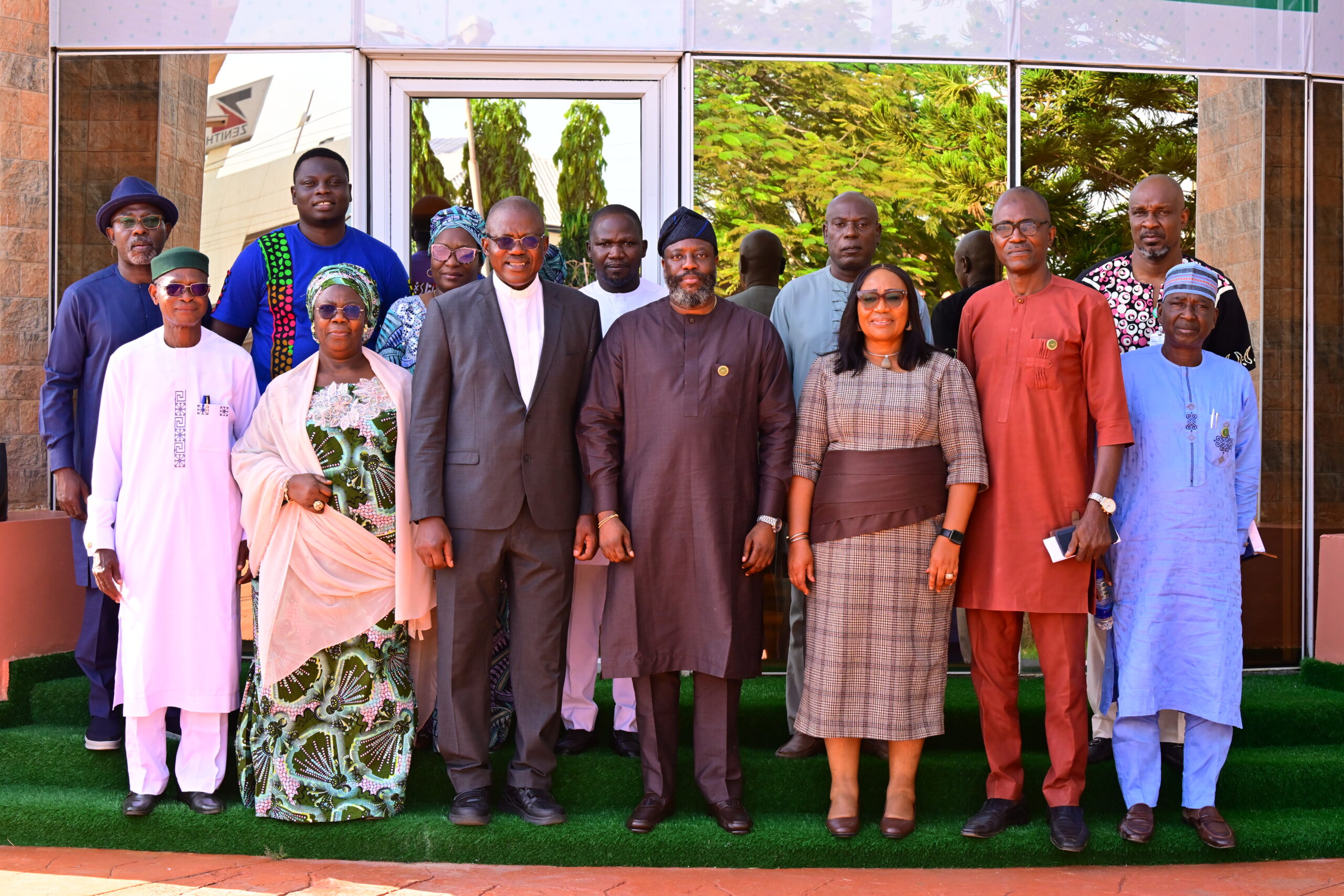
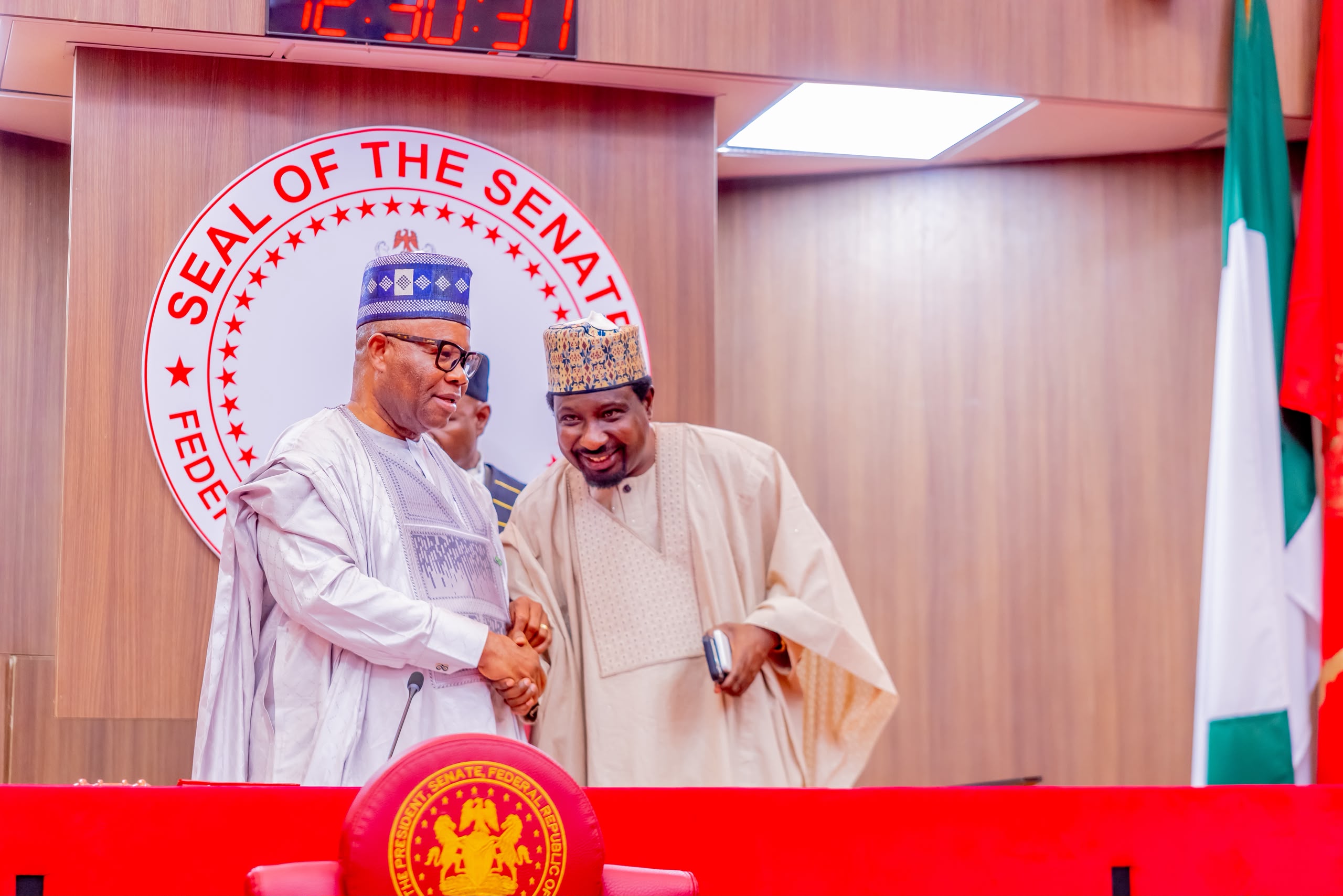
A statement signed by Ben. Agande, Head of Corporate Affairs and Communications of the University said the physical signing which was done in the full glare of Veritas University 154th Senate in session saw the Vice Chancellor of the University, Rev. Fr. Professor Hyacinth Ichoku appending his signature on behalf of Veritas, while Professor Emeka Aniagolu, Elder Solomon Appiah-Wilson, Dr Sam Amadi and Dr Mehad Nasreldin signed for Institute for African American Studies, Abuja; Commonwealth Forum, London; Centre for AI, Digital Justice and Economic Rights (CADER); and African Institute of Public Health Addis Ababa respectively.
Rev. Fr Prof, Hyacinth Ichoku who called for the suspension of the Senate in session to sign the Compact said the ceremony represented Veritas University’s “institutional response” to the Papal Call for institutions to “take up their responsibility in the age of artificial intelligence”
“The Humanitas AI Compact exists because of Magnifica Humanitas. In Magnifica Humanitas, the Holy Father, Pope Leo XIV, called on universities and institutions of learning by name to take up their responsibility in the age of artificial intelligence. This Compact is our institutional response to that call, beginning from Africa, and extending to all institutions entrusted with the formation, protection, education, healing, governance, and advancement of the human person” he said.
The Vice Chancellor noted that the message contained in the Papal Magnifica Humanitas is a simple message which emphasises that “AI must serve humanity: the poor, the sick, the migrant, the displaced by war, women and girls, and all those vulnerable to exclusion, poverty, conflict, sickness, displacement, manipulation, and invisibility”
Referencing the teachings of the Catholic Church, the Vice Chancellor pointed out that “an encyclical is never only a document to be admired. It is a call to be received, embodied, organized, and carried into the world”, emphasising that educational institutions in Africa must “begin to give institutional form to the call of Magnifica Humanitas” .
The Humanitas AI Compact rests on seven principles and seven commitments namely, Human Dignity, Subsidiarity, The Common Good, The Universal Destination of Goods, Truth, and the Integral Person.
The seven Commitments include:
Commit to reviewing and renewing our programmes so that learning in the age of AI forms whole persons, capable of reflection, discernment and conscience.
Commit to equipping our students, staff and those we serve with genuine digital literacy: the capacity to understand AI, its possibilities, its limits and its meaning for human dignity.
Commit to directing our AI-related work toward those most at risk of exclusion, the poor, the sick, the displaced and, in particular, women and girls.
Commit to guiding our AI-related work toward justice and peace, and to resisting the subordination of learning to purely economic or technical efficiency.
Commit to forming a renewed educational alliance for the digital age, with families, communities, associations and institutions across the world, placing the human person and the common good at the centre of all we do.
Commit to using our institutional voice in the governance of AI, contributing to the discernment of choices that affect people’s daily lives: in public discourse, policy processes and ethical frameworks.
Commit to the principle that the goods of the digital age belong to all of humanity and must not remain the privilege of the few. We will work, within our capacity, to advance this common good in everything we do.
The Humanitas AI Compact is a cross-sector movement which emphasizes that AI must serve humanity, with a strict priority placed on protecting vulnerable populations like women, children, those displaced by war. The Humanitas AI Compact rejects the assumption that AI possesses genuine creativity or discernment, critiquing reliance on purely predictive, algorithmic systems for critical human life decisions.
The next phase of the AI Humanitas Compact which will be done on the second month of the Papal Magnifical Humanitas will be open to a wider network of educational, healthcare, public and civil society institutions across Africa and globally.