



By Deborah Adekaa, Makurdi
The Benue State Government has begun a fresh effort to take the fight against sexual and gender-based violence (SGBV) beyond policy discussions by strengthening coordination among institutions responsible for prevention, response and support for survivors.
This followed the inauguration of a Steering Committee on SGBV in Makurdi, an initiative supported by the European Union and implemented by the International Institute for Democracy and Electoral Assistance (International IDEA).
The committee brings together relevant government ministries, security agencies, development partners, traditional authorities and other stakeholders, with the responsibility of guiding the implementation of the programme and monitoring its progress across the state.
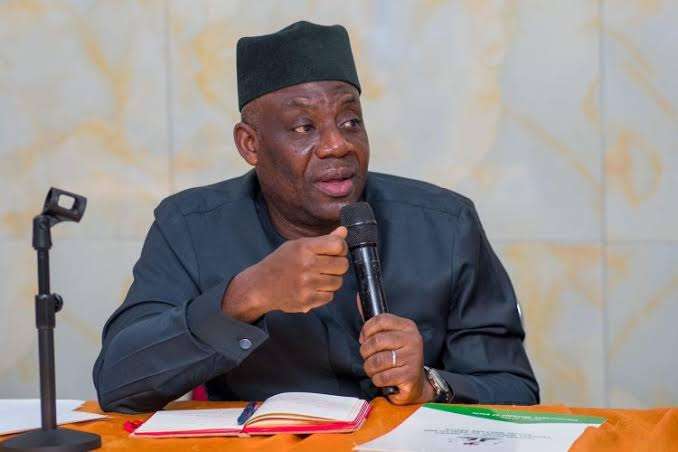
Speaking during the inauguration on behalf of Governor Hyacinth Alia, the Secretary to the State Government, Barrister Deborah Aber, said the administration recognised the need for a coordinated approach to addressing SGBV, particularly amid the humanitarian challenges affecting communities across Benue.
Aber said the state’s security situation and displacement crisis had increased the vulnerability of women and girls, citing available data which put reported SGBV cases in the state at more than 4,000 in 2023.
She also referred to International Organization for Migration (IOM) estimates that more than 500,000 people had been affected by displacement in Benue.
The SSG called for closer cooperation among the Ministries of Women Affairs and Social Welfare and Justice, security agencies and development partners, stressing that victims should have access to justice and appropriate support.
She said the government would continue to work with relevant organisations and institutions towards reducing SGBV and creating an environment where survivors could seek help without fear or stigma.
Representing International IDEA, Melissa Omenne said the programme was intended to address gaps in the existing response system by strengthening SGBV structures at the federal, state and local government levels.
According to her, the success of the intervention would depend largely on the ability of stakeholders to work together and ensure that programmes were responsive to the actual needs of survivors and affected communities.
She said the steering committee would provide oversight for the programme, monitor implementation and help address challenges that could affect its effectiveness.
The Commissioner for Women Affairs and Social Welfare, Mrs Theresa Odachi Ikwue, however, drew attention to one of the practical challenges facing survivors — access to services.
Ikwue appealed for the decentralisation of SGBV services so that survivors in communities outside Makurdi would not have to travel long distances before receiving assistance.
She noted that the ministry already had auxiliary social workers across the wards who could play a greater role in identifying cases, providing initial support and linking survivors with appropriate services.
The commissioner also called for more public awareness, saying communities had an important role to play in preventing SGBV and supporting victims.
She commended UNICEF, security agencies, the Ministry of Justice and International IDEA for their partnership and urged members of the public to report cases rather than remain silent.
Earlier, the International IDEA State Coordinator, Mrs Gloria Bai, outlined the objectives, components, expected results and work plan of the programme.
Members of the committee also considered their terms of reference, while Mr Edikan Mikop presented the programme log frame.
For the wife of the Tor Tiv, Felicia Hembadoon Ayastee, the inclusion of traditional institutions in the initiative provides an opportunity to strengthen community involvement in tackling SGBV.
She described the issue as a major concern requiring sustained attention and pledged to support the programme within her capacity.
The inauguration signals an attempt by stakeholders to move SGBV response closer to communities, strengthen existing structures and improve the pathway through which survivors can access protection, healthcare, psychosocial support and justice.